Overview
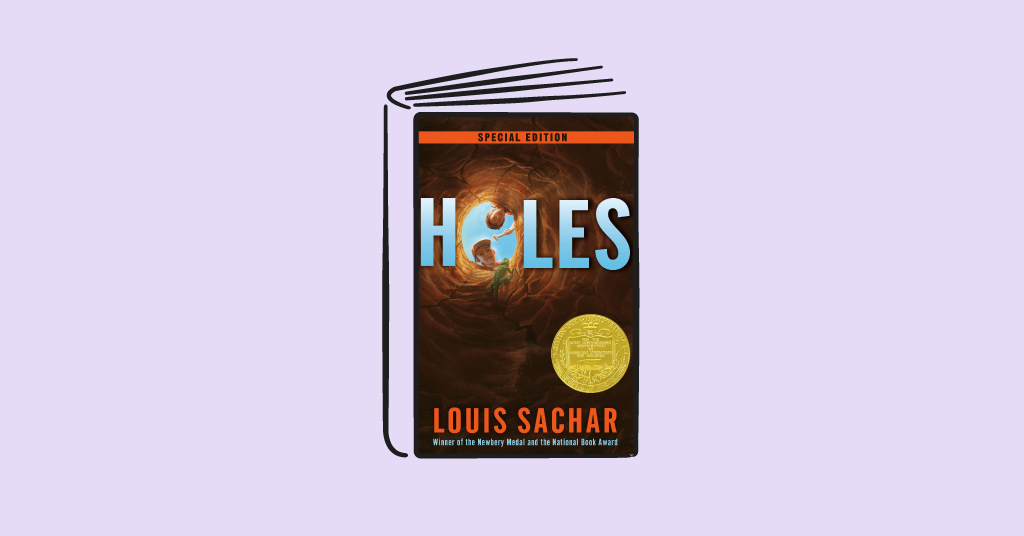
Holes is one of those intriguing stories that has a main plot, plus multiple subplots that seem to be disconnected, until it all comes together spectacularly in the end. Since its release in 1998, tons of readers have remembered this peculiar and entertaining story from their reading assignment list in English class. And then, even more people remember the movie adaptation with Shia LaBeouf on the Disney Channel in 2003.
The main plot follows Stanley Yelnats III, a teenage boy who gets falsely accused of stealing a pair of famous shoes and is then shipped to a delinquent detention camp called Camp Green Lake. But Stanley’s time at camp reveals how his great-great-grandfather from hundreds of years ago and a criminal outlaw from the 1800s, completely altered the fate of himself, his family, and his friend.
So is Holes safe for kids to read? Considering this book has been read in the classroom for decades now, it’s safe to say that it’s appropriate for kids. But we pulled all the details you need to know to be sure it’s a fit for your child. Let’s begin!
Harmful Content ❗️
As mentioned, the premise of the story involves Stanley being accused of stealing, which lands him in a camp for delinquent boys who committed similar crimes. At this camp, the boys are forced to dig six-foot holes in the desert all day long. The camp is described as a tough environment, with both the other boys and even the authority figures being unreasonably harsh with Stanley.
On that note, the bullying in the book is significant, but not disturbing. Stanley is described as an overweight kid, which is one of the reasons he gets picked on by the others. Another camper named Zero gets picked on for being stupid because he never speaks. The book ends with Stanley becoming decent friends with the boys, especially Zero; however, the moments of bullying before that point do make the reader pity Stanley and Zero.
Parents should know that there is a theme of racism that plays a role in one of the subplots of the book. The subplot takes place in the 1800s with two characters, Sam and Katherine. Katherine is a school teacher who falls in love with Sam. Sam is a black man, and it’s clear the town is prejudiced against him due to his race, which is reflective of the culture at that time. The book handles the topic tactfully and communicates the injustice of the circumstances that Sam faces. And while it’s not the largest focal point of the novel, it’s still relevant and worth a conversation with your child as they read and comprehend this part of the story.
Language
There’s no adult language or profanity, but there is some bullying and crude language such as “butthole” or “shut up.”
Sex
There is no sexual content in this book. There is the romance that takes place between Sam and Katherine, and at one point, they share a kiss. But there is nothing graphic or explicit.
Violence
Sam and Kate’s story ends with the town executing Sam. After this, Katherine becomes “Kissin’ Kate Barlow”, an outlaw who robs men and kisses them before she kills them. These more intense parts of the book are never overly graphic, but still written in a way that allows the reader to understand the weight of Sam’s fate and Kate’s actions.
There are also references to a fictitious poisonous reptile called the yellow-spotted lizard. It’s said that this lizard is deadly, and there’s an implication that previous campers have died from being bitten by one, but it’s vague and unconfirmed. Authority figures use the threat of these lizards as a scare tactic to keep the campers in line, though nobody actually dies from it in the book.
Sometimes the bullying between the boys gets physical with pushing and shoving, but it’s not too violent and is only a brief scene in the book.
Positive Value 💫
Holes is a story of fate, redemption, and the power of kindness. Stanley exemplifies kindness and humility, particularly in his eventual friendship with Zero. It’s this friendship that ultimately breaks the Yelnats’ family curse. Stanley and Zero both show immense loyalty to each other, even at great personal risk. They also show perseverance in the face of hardship, and never give up hope when their strength is tested intensely towards the end of the novel.
Stanley also learns to stand up for himself, particularly against the cruel and injustice camp authorities who had been abusing their power. One of the book’s major themes is that those who are greedy and dishonest don’t always end up on top, and those who choose kindness and truth will eventually reap the benefits.
So, should my kid read it?
Yes! We’d say this book is appropriate for kids around 9 and up. It’s an enriching story with lots of positive lessons for kids to learn. Just be sure you have any necessary discussions with your kids around some of the more sensitive topics.