Overview
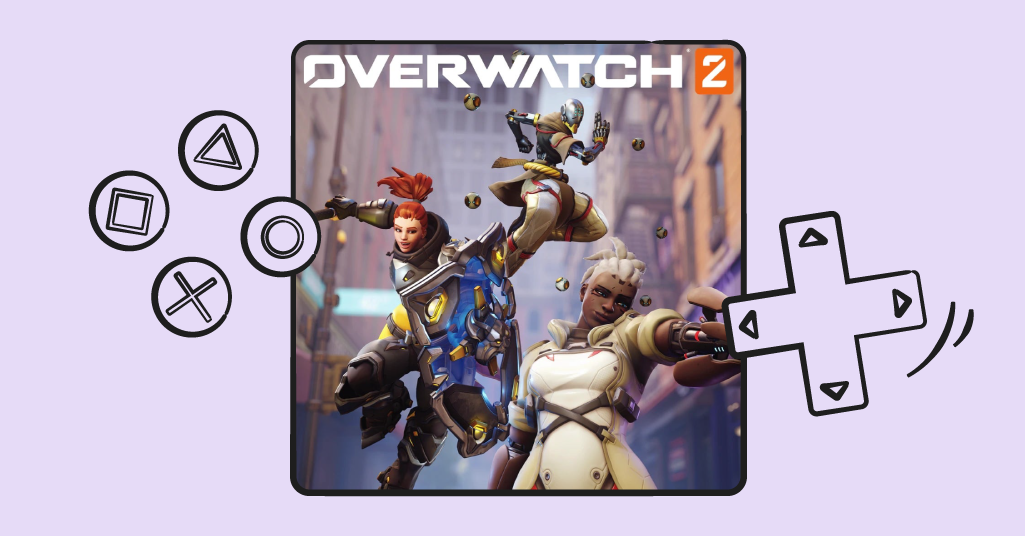
Overwatch 2 looks like a bright and vibrant video game, but it’s also a fast-paced, first-person shooter game with constant high-energy battles. It certainly sets itself apart from most first-person shooter games with its cartoonish and stylized visuals, but there are some things parents will want to consider before allowing their kids to play. We did the deep dive so you didn’t have to, and here’s what we found.
Harmful Content ❗️
Parents should know that this is a first-person shooter game, meaning the objective is to use weapons to take out opposing characters. The stylized visuals of the game make it less realistic (think Fortnite rather than Call of Duty). Additionally, this game has to be played online, meaning you’ll always be playing with other gamers over the internet. The game encourages players to use the in-game voice chat to communicate with one another. This poses a significant risk for predators and inappropriate content, so parents should ensure the chat is supervised if they allow their child to play.
Language
The game itself has very little profanity (perhaps the occasional “hell” or “damn”), but adult language should be expected from the in-game chat from other players.
Sex
Sexual content is minimal in this game and definitely not the focus. There are some characters with form-fitting outfits that may show middrifts or cleavage. Additionally, there may be moments of casual flirting between characters.
Violence
The majority of the game is spent in active combat with other players. Players can use weapons, explosives, and special abilities to defeat the opposition. Deaths and injuries in Overwatch 2 are never bloody or realistic; characters simply fall over or disappear.
Essentially, compared to all video games, it’s considered violent. But compared to just first-person shooter games, it’s pretty mild.
Positive Value 💫
As far as video games go, Overwatch 2 has a lot of characteristics that can teach kids meaningful lessons. First, the game heavily emphasizes teamwork and communication. Players are put into teams of five, and each has a different role to play. Players have to learn how to rely on each other to be successful, as well as how to be a reliable team player themselves.
Overwatch 2 also teaches a lot about strategic thinking and problem-solving. Similar to most video games, things like quick decision-making and resource management are essential to be successful in this game.
Lastly, Overwatch 2 is all about playing as a unique and valuable hero. Players get to choose from a wide variety of heroes, each with their own special abilities. This encourages teens to take pride in being a hero and in the special talents they bring to the table.
So, should my kid play it?
Given the inherent violence of this game, we’d say this is best for teens. But since it’s not as realistic or graphic as most first-person shooter games, we believe it’s suitable for teens around 13 and up. However, you know your child best, and what they can handle, so we encourage parents to take that into account before making a decision.