
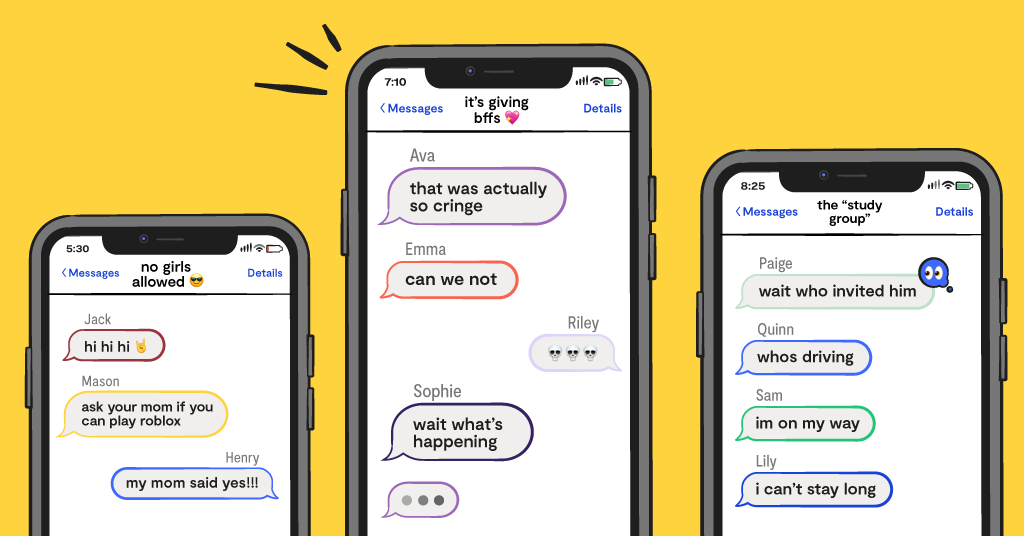
Group chats are at the center of socialization today. Kids are planning weekends, swapping memes, and sharing school gossip in the world of fast-moving message threads. For many parents, watching these chats unfold feels like trying to read a foreign language: the platforms change, the etiquette shifts, and sometimes the problems kids face online show up earlier than we expect.
From elementary school message threads to Discord servers and private Snapchat groups, parents are increasingly asking the same questions: When should kids have group chats? What platforms are they using by age? And how do you keep them safe without smothering their friendships? Understanding what’s normal and what’s risky at each age can help parents know when to support, when to guide, and when to step in.
Group Chats for Younger Kids (Ages 7–9)
In the early elementary years, group chats are usually small, simple, and often parent-mediated. Most communication happens through family text threads, parent-created class chats, or kid-specific platforms like Messenger Kids, which allows parents to approve contacts and view conversations. Some kids also encounter basic chat features inside games like Roblox, where messaging is often tied to gameplay rather than social planning.
The main issue isn’t drama at this stage—it’s misunderstanding. Kids this young struggle with tone, sarcasm, and digital permanence. A short message can easily feel “mean,” and kids may overshare names, photos, or school details without realizing why that matters. Parents can help by supervising chats directly, keeping devices in shared spaces, and framing group chats as a shared responsibility rather than a private space.
Group Chats for Tweens (Ages 10–12)
As kids move into the tween years, group chats become more peer-driven. Many still rely on standard text messaging, but curiosity grows around apps that feel more social or private, including WhatsApp or early use of Snapchat. Chats often revolve around school, friendships and coordinating plans, and kids begin to care deeply about who’s included — and who isn’t.
Exclusion, teasing and oversharing tend to surface here. Tweens are emotionally invested but still learning how to handle conflict, which can make group dynamics feel overwhelming. Parents can help by setting clear expectations around kindness, privacy and screen time, while regularly checking in about how chats make their child feel, not just what’s being said.
Group Chats for Younger Teens (Ages 13–15)
For younger teens, group chats are a primary social space. According to Pew Research Center, the majority of US teens use platforms like Snapchat, Instagram and TikTok daily, often communicating through group messages built into those apps. Many teens say they’re online almost constantly, which reflects how central these chats are to their social lives.
What makes this stage especially intense is the volume and pace of communication. Messages fly fast, inside jokes and challenges spread instantly, and disappearing or visual messaging can make teens feel like they always have to be “on.” That pace amplifies emotional ups and downs, and risks emerge: cyberbullying can spread quickly, peer pressure can peak in high-activity threads, and teen brains, still developing impulse control, may share or react without thinking about consequences.
Parents can lean into empathy and moderation here, not surveillance. Asking open-ended questions about who kids are chatting with and what kinds of jokes or conversations they’re having gives teens space to be honest without feeling policed. Setting ground rules like no messaging after a certain hour and helping teens learn to mute or exit chats that make them uncomfortable reinforces healthy habits without cutting them off from connection.
Group Chats for Older Teens (Ages 16–18)
Older teens juggle multiple group chats across overlapping platforms. Snapchat might be where they send plans and inside jokes, Instagram group threads show memes and reactions, Discord servers host gaming chats, and even messaging inside YouTube or TikTok can tie back to real-life friend groups.
Parents often see less of this activity, and that’s appropriate at this age. But the stakes can be higher. Chats may include discussion of relationships, parties or risky subjects. This is where the focus shifts from monitoring to guidance. Helping teens think through digital footprints, privacy settings, and how to exit or report threads with harmful content empowers them to take ownership of their social spaces.
Red Flags Parents Should Watch For at Any Age
Across all ages there are signs that a child’s group chat experience may be causing harm. Sudden mood changes after checking messages, secretive behavior around phones, or anxiety about notifications or exclusion are all signals worth exploring with care. These behaviors often reflect deeper feelings about social belonging and can be an opening for meaningful conversation rather than immediate restriction.
Setting Healthy Group Chat Boundaries
Healthy boundaries grow with your child. Younger kids may need structured supervision and limited chat access, while teens benefit more from nurturing digital citizenship — knowing when to step away, how to mute or manage notifications, and that leaving a group chat that feels negative is okay. Setting expectations together — not simply imposing them — helps kids internalize healthy habits rather than rebel against them.
How Bark Can Help
Bark monitors group chats across supported platforms and alerts parents to potential concerns before they escalate, giving families insight without turning group chats into a battleground. Bark’s alerts allow you to move from reacting after a problem arises to preventing harm through timely, compassionate intervention.
Bark helps families manage and protect their children’s digital lives.
