
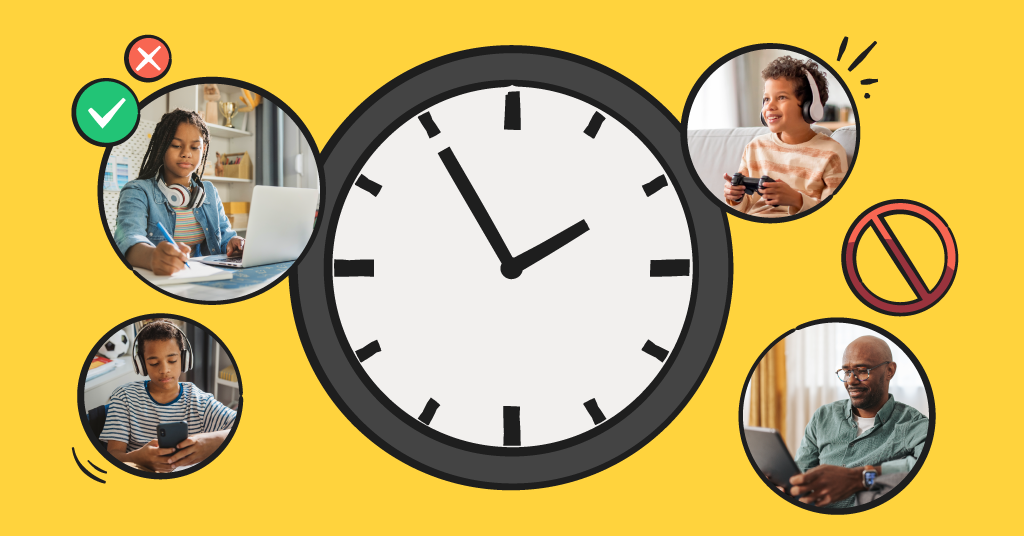
Getting your kids to follow and understand the rules has been a challenge for parents across time, but there seems to be something extra slippery about tech rules. If you feel like everything you say about screens goes in one ear and out the other, you’re not alone. Technology is constantly evolving and sneaks into our kids’ lives in ways we don’t always expect.
But it doesn’t have to feel overwhelming. It’s possible to create a structure that feels both firm and fair. One of the best ways to do that? A family tech agreement.
If you’re not sure where to begin on writing a tech agreement for your family, no sweat! We’re going to go over the concept of a family tech contract, why it works, how to do it with your family, and real-life examples to get you brainstorming. Let’s jump in!
What a Family Tech Agreement Actually Is
If you’ve never heard of this, it might sound a little extreme. But we’re not talking about writing up an official document as if it’s a legal negotiation. We’re talking about a way to start important conversations with your child and allow them to participate in shaping what digital safety looks like for the whole family, rather than just being told what’s right and wrong.
And yes, for many families, it is a physical piece of paper or electronic document with a list of expectations and guidelines. But it’s the process of creating the list and conversation paired with it that matters.
Why Most Tech Rules Don’t Work
The kind of tech rules that don’t work are the vague, constantly changing rules that kids don’t understand the why behind. Child development experts have long understood that kids thrive with structure and consistency. But when the rules change day by day, and there’s no expected consequence when a boundary is crossed, it creates chaos and confusion for everyone. A family tech agreement can help nip a lot of that in the bud from the start.
What to Include in Your Family Tech Agreement
We’ll get into some very specific examples further down, but here are just a few general areas to consider making tech rules for. Some of these may feel more or less important to you, and some may not even feel relevant right now. But this is just to get the ball rolling for which ones you want to focus on with your family.
- When devices can be used.
- Where devices can be used.
- Bedtime and charging rules.
- App download expectations.
- Texting and group chat behavior.
- Social media boundaries.
- Privacy and password expectations.
- What happens if safety concerns come up.
- Consequences for breaking the agreement.
Real-Life Family Tech Agreement Examples (By Age)
Here’s where we get practical. The name of the game is specific and consistent. It’s a fine line, because you don’t want to be too rigid that the rules become unreasonable and impossible to keep. Expect to have some revisions along the way as your child grows and tech changes. But to start, don’t be afraid to be detailed about expectations.
Young kids with tablets or shared devices
- Devices are only used in shared family spaces
- Screen time happens after schoolwork or chores
- No devices during meals
- Parents choose and approve all apps
- Devices are put away 1 hour before bedtime
- If something confusing or scary pops up, tell a parent right away.
- If rules aren’t followed, screen time may be paused or reduced the next day.
- There will be a five-minute warning before the device needs to be put away.
- Parents will also keep devices away during meals.
- If you share something confusing or scary, parents will not get mad and promise to help you.
Pre-teens with their first, limited personal device
- Phone stays out of the bedroom overnight (charges in a central spot)
- Parents approve all app downloads
- No social media until age 13, social media apps will be introduced slowly on a case-by-case basis
- There will be no name-calling or mean behavior in group chats.
- Screen time limits are set for weekdays vs. weekends
- No deleting messages or browsing history without parent approval
- Unknown contacts are not accepted without checking first
- Parents will respect your privacy while also supervising enough to keep you safe.
- Parents have the right to check the device if needed anytime.
Teenagers with full smartphones
- No phones during class unless required
- Overnight charging outside the bedroom (or set downtime schedules)
- Location sharing stays on for safety
- Respectful communication (no bullying, harassment, or sharing private info)
- Open conversations about social media use and mental health
- If something goes wrong, honesty matters more than punishment
- No sharing personal information (location, school, etc.) with strangers online
- Parents will be transparent about any monitoring or rules in place
- Parents will listen before reacting if something goes wrong
- Parents will not overreact when you come to me with a problem
Take it one step further with our downloadable Technology Contract template and start your family’s tech agreement today!
How to Create a Family Tech Agreement With Your Kids
You could write the agreement yourself and present it to your child. But it’s a great opportunity to get your child thinking and involved if you write it together. Start with questions like, “What do you think are fair rules for phones or devices?” Of course, you’ll ultimately get the final say, but this way, kids feel heard.
And when you’re done, make it official! Have everyone sign their name at the bottom or shake on it once the expectations are agreed upon. It might feel a little silly, but it signals to kids that they’re equally involved and responsible for how tech is handled in the home.
Keep Communication Open
And remember, keep the conversation going! This isn’t a one-and-done thing. Make your list accessible and visible so you can reference it anytime it’s needed. If they start to complain or push back, you can remind them that these are the rules you decided on together. And you can both be ready to make changes to the agreement when it’s necessary, as discussions around their online world continue.
How Bark Can Help
When it comes time to enforce those screentime rules and start doing phone checks, parents can feel overwhelmed all over again, even after the expectations are in place. This is where Bark comes in to help you manage your child’s digital safety without feeling stressed or like you’re invading their privacy.
Bark helps take the pressure off by monitoring for serious concerns (think cyberbullying, predators, or signs of mental health struggles) and alerting you when something needs your attention. Additionally, our screen time and web filtering features can help you enforce those screen time rules automatically, so that it becomes an expected habit for everyone.
Whether it’s the Bark Phone, Bark Watch, Bark app, or Bark Home, we’re confident our suite of parental control tools can help your family stay safer in the digital age.
Read more

Bark helps families manage and protect their children’s digital lives.