
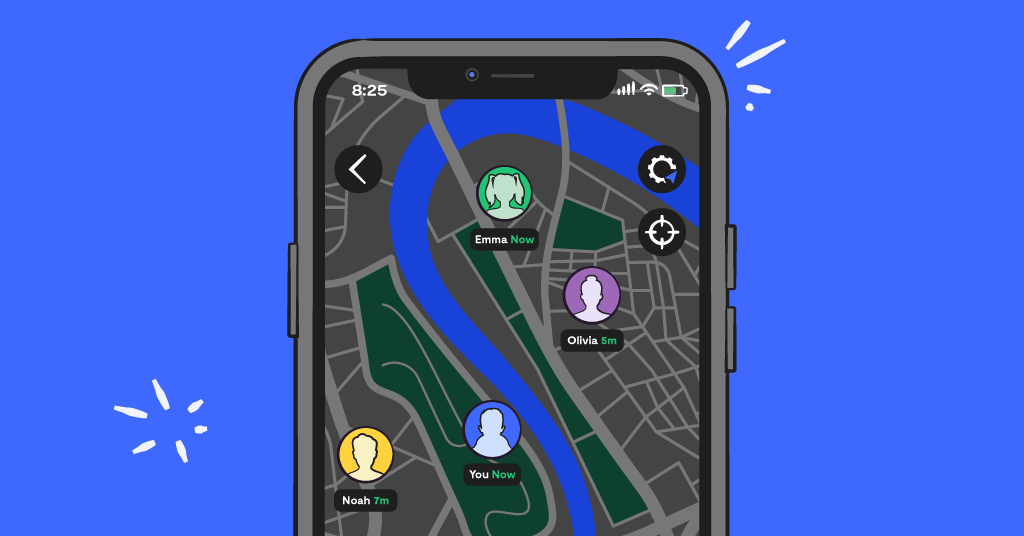
If you can’t beat ‘em, join ‘em, right? This seemed to be Instagram’s mantra as the company launched its new Friend Map feature this week. The move is clearly aimed at capturing the success of Snapchat’s deeply problematic Snap Map, and perhaps even persuading hardcore Snapchat users to spend just a little more time on Instagram, as well.
There are some interesting philosophical questions surrounding this announcement, as well as practical online safety considerations that parents definitely need to be aware of. In this post, we’ll dive into both, along with ways to help protect your child on Instagram with Bark if you’re worried about this new feature.
Wait, Why Is Instagram Trying to Be Like Snapchat Again?
This may seem like a bold move for the Meta platform, but they’ve done it before. Remember when they launched Stories back in 2016? It was widely seen as a direct response to — and imitation of — Snapchat’s popular feature. Instagram appears to be continuously fighting for relevance against its arch-enemy.
But at the end of the day, it’s unclear what Instagram is trying to achieve. Do they think long-time Snapchat users will spend more time on Instagram now? Will they convince people who’ve never used Snapchat or the Snap Map to suddenly start sharing their location with hundreds of Instagram followers on an app that was originally built for sharing filtered photos? Time will tell, but in the meantime, it’s important for parents to stay on top of Instagram’s business ventures. These decisions can directly impact the safety of their children.
How It Works
The new Friend Map is rolling out to all Instagram users and can be accessed through the messages screen. At the top of the page, where some folks leave Notes (another Instagram roll-out that didn’t take off like they thought it would), there’s a map icon.
When you tap it, an in-app map appears. Here, you’ll be able to see friends’ locations (those who choose to share them) along with stories tagged in public locations like restaurants and movie theaters.
A few things to keep in mind:
- Location sharing is completely optional, and you have to opt in to it. (Although some early users have reported being enrolled automatically.)
- Your location only updates when you open Instagram, not 24/7.
- You can choose who you share with: friends, close friends, only certain people, and no one. There doesn’t appear to be an option to share your location with the general public, which is one small positive point.
- Instagram said that parents using the Family Supervision feature will get notified if their child is sharing their location and will have control over it. However, it’s important to remember that kids can unilaterally turn off supervision at any time.
The Dangers of the New Friend Map
If your parenting senses tingled at this announcement, you’re right to worry. We’ve had years to observe and reflect on the dangers that have arisen from Snapchat’s Snap Map, and there’s no reason to think that Instagram’s venture into location sharing will be different. Here are just a few of the dangers kids and families face:
Giving potential strangers their exact location
Even though Instagram said that users won’t be sharing their locations with the public at large, that doesn’t eliminate the danger of this activity entirely. Kids broadcast their location to anyone they’re “friends” with, but keep in mind that not every “friend” is one they know in real life. It’s incredibly common for kids to add “mutuals,” which can be friends of friends. Sometimes, it’s an actual kid, but it could also be a complete stranger.
Friend drama, bullying, and FOMO
Unfortunately, bullying is already a common issue on Instagram, and the new Friend Map feature may add to that pressure. For example, a child might see their friends spending time together without them, which can trigger feelings of exclusion and insecurity. This isn't just about missing out on an event; it can lead to deeper concerns about self-worth, popularity, and belonging. Over time, experiences like this can negatively impact a child’s mental and emotional well-being.
Drug dealers and delivery
This is one that many parents don’t know about, but it’s extremely concerning. There are documented cases of known drug dealers reaching out to kids on Snapchat and delivering deadly drugs as quickly and easily as a pizza, including the tragic case of Sammy Chapman. It’s unclear how this issue will unfold on the Instagram Friend Map, but we’re extremely concerned that it could potentially happen there, as well.
How Bark Can Help
Apps like Instagram and Snapchat aren’t making things easy for parents in the digital age, and they’re constantly adding new features that can be potentially dangerous. Stay updated and in the know with Bark’s app reviews, weekly blog posts, and tech guides, and connect with other parents going through the same thing over in Parenting in a Tech World, our Facebook group for digital families.
Bark can also help you block Instagram if you’re worried about your child spending too much time on it. Whether it’s with the Bark app, the Bark Phone, or the Bark Home, you can rest easy that the boundaries you put in place actually stay in place. Check out our products page to learn more about our online safety offerings, including our award-winning monitoring feature that scans for dangers in texts, emails, apps, and social media.
Read more


Bark helps families manage and protect their children’s digital lives.