
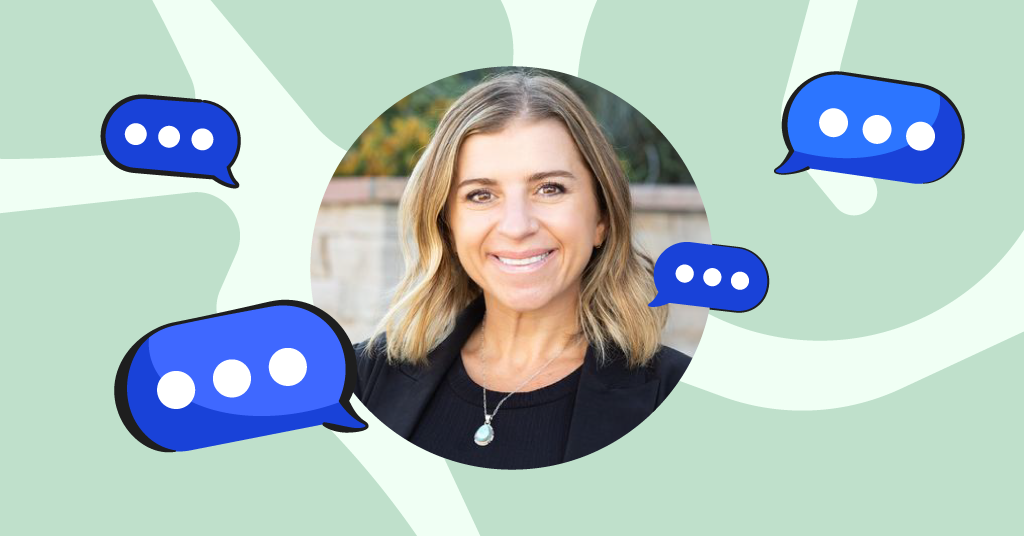
After 15 years running a successful social media marketing business, Nicki Petrossi had seen enough. She’d witnessed firsthand how addictive features, manipulative algorithms, and unchecked corporate priorities were shaping — and in many cases harming — an entire generation. Instead of staying quiet, she walked away from the industry and began speaking out.
Today, through her hit podcast Scrolling 2 Death, Nicki is sounding the alarm for parents, taking on Big Tech, and arming families with the knowledge they need to help protect their kids online.
In our conversation, she shares the moment that changed everything for her, the hidden design tricks parents need to know about, and why she believes delaying smartphones is one of the smartest moves a parent can make.
Your platform, Scrolling 2 Death, really grabs attention with its name. What was the moment or experience that inspired it?
I remember it vividly.
Back in 2023, I was sitting at dinner with a close friend. I saw a mom walking in with her son, and he was maybe 10 or 11. I thought, “How cute! A mommy-son date night.”
They sat down to our left, and the first thing the young boy did was reach into his pocket and pull out an iPhone. For the entire evening, he stared at that phone, scrolling and playing games. The mom sipped her wine and looked at her phone on and off.
During this dinner, we also observed a family to our right. It was a teenage girl, her mom, and her grandmother. The teenager was also on her phone most of the meal, looking miserable and not speaking to her family.
I was so upset. I remember thinking, “Is this what I have to look forward to?” and “Is this what kids are like once they get phones and social media?”
I went home and decided to do some research. Boy, was I shocked at what I found. To recap:
- The U.S. Surgeon General had just put out a warning to parents. Three or more hours of social media use doubles our children’s risk of experiencing anxiety and depression symptoms.
- Teens were spending nearly five hours on social media per day, on average.
- Suicide rates in children aged 10 – 14 had nearly tripled in the past few years.
I dug further. I found story after story of families who had literally lost their children due to something that happened on social media. This was all insane to me! How did every parent not know about all of this? How were these issues not mainstream news in every school newsletter or communicated by pediatricians?
I made it my goal to make sure every parent has all the information about the threat of screens and social media before vital decisions are made in the home. And, because of the obvious link between “scrolling” and the mortality of our youth, I decided to go with “Scrolling 2 Death.”
A special thank you to my dear friend and confidant, Elena, who heard me say “Scroll & Die” and very quickly said, “That’s not good. It should be…Scrolling 2 Death.” Thanks, girl.
You often talk about the "design of addiction" on social media. What should parents understand about how these platforms are built?
The number one goal for social media companies, above all else, is engagement. Engagement means eyes on screen for as long as possible. How do they do that? Well, they hire neuroscientists and technologists and put them in a room to figure out how to get — and keep us — engaged.
What happened next? The algorithms, which are powered by AI, became so good that children are now spending nearly eight hours per day (on average) on their phones. It’s like their full-time job, and they literally cannot look away. They’re addicted.
Social media companies make all kinds of design choices to addict us. To name a few:
- Snapchat’s Snap Score rewards you for every consecutive day you message with “friends.” Kids compete with each other to earn higher Snap Scores. They base the strength of their friendships on these scores and feel anxiety if they miss a day. Oh, but don’t worry, kids! If you miss one, you can pay money to reinstate your Snap Score. What a way to prey on children’s insecurities to make a buck.
- Back in 2015, YouTube introduced the Autoplay feature. It automatically plays the next suggested video after the current one finishes, designed to keep viewers watching indefinitely.
- It may seem crazy, but there was a time before notifications. Shortly after Facebook launched, they realized that they could keep users coming back by “poking” them (as it was first called). Notifications have since expanded, and users are often reminded to come back dozens of times per day, sometimes hundreds. Social media companies don’t want you to forget that they are there, ready to give you another dopamine hit and keep you coming back over and over and over and over.
When you talk with other parents, what’s the number one thing they say they wish they’d done differently with tech?
Every parent with teens or older children says, “I wish I had waited longer to give my child a smartphone (or a device).” No parent has told me, “I’m happy with when I gave the phone,” or “I wish I had given it earlier.”
It makes sense. Research indicates that giving children smartphones at younger ages is linked to poorer mental health outcomes later in life. Specifically, studies suggest that early smartphone use, particularly before the age of 13, is associated with increased risks of suicidal thoughts, aggression, detachment from reality, and difficulties with emotional regulation, according to UPI. This is amplified for girls.
This is why I tell every parent to DELAY SMARTPHONES. Many follow the “Wait Until 8th” pledge, which I respect. But it’s outdated. We should be waiting to give smartphones until kids are 18 years old. During the teen years, it is one million times safer and healthier to give your child a flip phone or a child-safe phone like Bark.
Your involvement with legislative efforts around big tech/social media is very inspiring. What’s the one regulation or change you think could make the biggest difference right now?
My “pie in the sky” hope is that we ban social media use for minors. At the very least, we should set an under-16 ban like was done in Australia. Since social media companies refuse to create safe platforms for children, keeping them off is the obvious answer.
That said, there doesn’t seem to be regulation in the works to increase the age limit for social media use. If there were, Big Tech would spend millions lobbying against it. So for now, our best bet is both KOSA and the Age Appropriate Design Act. These two bills put pressure on both the social media companies and the App Store to design age-appropriate experiences for children. We should also be making progress on reforming or sunsetting Section 230, a decades old law that immunizes social media companies from legal liability.
Parents should contact their senators (senate.gov) and house representatives (house.gov) and ask them to support KOSA and APRA and a Section 230 Sunset.
What does a “healthy relationship with tech” look like in your home today?
Well, funny you ask! We just finished putting together our Family Tech Plan. We believe technology can be a helpful tool — but it should never replace real-life connection, play, or creativity. In our home:
- We use technology as a tool when needed, not as a constant background activity.
- We do not use technology alone — we choose connection over isolation.
Guidelines for kids ages 5 – 11
No solo media use
- We watch, play, and explore tech together so we can share the experience and talk about what we see.
Ask before using adult devices
- Kids never touch an adult's phone, tablet, or laptop without permission. Even with approval, adult devices are not to be used by children alone.
- This keeps kids safe from accidental exposure to adult content, private information, or unsafe apps.
No tablet use, even when traveling
- We value looking out the window, reading, drawing, or talking together over private screen time.
- TV on airplane seatbacks is okay because it’s limited, controlled, and can be a shared experience.
- If we’re at a playdate or another home, we communicate our boundaries and suggest non-screen activities to keep the kids engaged.
Tech curfew: No screens after 7 p.m.
- Our brains and bodies need time to wind down for healthy sleep.
- The blue light and stimulation from screens can keep us awake and affect our sleep.
Evening TV is family TV
- If we watch something in the evening, we do it together on the family television so we can laugh, talk, and connect over it.
Video games are a group activity
- Playing video games can be fun in moderation and when played together. We don’t play alone and limit them to 30-minute sessions.
Why we do all this
- To protect our hearts and minds
- To sleep better and feel better
- To make sure tech never takes the place of play, creativity, boredom, or rest
- To keep family time stronger than screen time
Scrolling 2 Death has struck a chord with thousands of families. What do you think it says about the moment we’re in right now?
I think parents are worried about their kids and social media, but it’s more than that. We are pissed. We have finally realized what these companies are knowingly doing to our kids, and we’re ready to fight back.
Can millions of parents take on billion-dollar companies? I say yes, and they better be ready.
For parents reading this and who are feeling overwhelmed, what’s one small, first step they can take to begin protecting their kids?
Talk to your kids. Early. Often.
No matter how long we delay device use or how much we monitor, there’s still a very good chance kids are going to encounter something bad online before they’re ready to handle it. The most important thing is that our children feel comfortable talking to us about it.
If we’ve engaged about online harms with our children already, they will consider us a resource. This means we have to talk to our kids about pornography, online predators, dangerous challenges, the opioid crisis, cyberbullying, and a dozen other things that are tough to talk about.
Parenting today looks very different. We can’t afford to ignore these conversations and hope our children will make smart choices. Kids will never be smarter than an algorithm or the predators it was built for.
Open conversations with our kids are the most important protective factor. Beyond that, delay use, monitor their child-safe devices, no tech use in bedrooms or private spaces, and aim for a tech-together mentality.
Keep the conversation going, and help keep your kids safe online with Bark
Technology isn’t slowing down, but you can give your family the tools to stay ahead. Bark helps parents manage screen time, block harmful content, and get alerts for potential dangers in texts and social media. Check out our products page to learn more about the Bark app, the Bark Phone, the Bark Watch, and Bark Home.
Want to hear more from experts on raising kids in the digital age? Check out Titania Jordan’s interview with Nicki on Bark’s Parenting in a Tech World podcast. It’s full of practical tips and insights you can use to help protect your child online and in real life.
Bark helps families manage and protect their children’s digital lives.