

In a world filled with AI slop, misinformation, and constant ads, it can be hard to tell what’s real and what’s fake these days. For kids, it’s a full-on digital minefield. That’s why parental guidance matters now more than ever. If you’ve been wondering how to teach kids critical thinking skills, you’ve come to the right place.
In this blog post, we’ll explore ways to help your child think outside the box, learn to question information, and generally think more intelligently about themselves and the world around them.
How to Teach Kids Critical Thinking Skills? Start with Curiosity
One of the most important things you can instill in your child is curiosity, which fortunately comes easily for younger kids. Children are naturally curious about nearly everything — remember those early years of the constant “why?” responses when you mentioned anything? Make sure to keep practicing this skill.
Model curiosity yourself, give kids space to explore and wonder about things, and provide an environment where kids can always feel comfortable asking questions. Some kids are just by their nature going to be more curious than others, but you can still help encourage your child to explore the world with an open-minded and positive attitude.
Use the Socratic Method to Help Your Child Learn to Trust Their Judgment
It works in law schools, and it also works with kids! Instead of just giving your kid an answer to a question, ask them questions back to help them understand the issue.
Here’s how to do it: Your child asks you, “Why do astronauts have to wear a space suit?” Rather than just saying “there’s no oxygen in space,” you can respond with “Well, how do you think space is different from Earth?” Depending on their response, you can provide a little more information with each new question.
The Socratic method works because it teaches kids to not only rely on their own thinking skills but also to slow down, ask questions, and make thoughtful decisions on their own.
For Older Kids, Emphasize Skepticism When It Comes to Online Content
Critical thinking becomes very important as your kids get older and start spending time online. Making sense of the internet can be like drinking from a firehose of nonsense, misinformation, dangers, and more. Skepticism is a healthy approach to much of what the internet has to offer, especially given how much content is created every single day, and that there are no real rules on what’s allowed and what’s not.
As AI advances, it will become even harder to tell the difference between what’s real and what’s fake. Dangers lie not only in misinformation but also in deep fakes, which are videos made with AI that show a real-life person doing something they didn’t do. Deep fakes run the gamut from harmless jokes to damaging depictions of sexual acts.
How to Teach Digital Literacy
One of the first things to teach your child is that not everything online is true — and in fact, most of the time it isn’t. Just because a product or a news story is on a website doesn’t make it real. This is how older generations often get tricked online, too. Here are some ways to encourage your child to think critically about the content they consume online.
- Always ask, “Who benefits from this story?”
- If something seems too wild to be true, make sure you Google it and confirm it from different, reputable sources.
- Teach the difference between a reputable source and a personal website/ad.
- Check the comments or reactions. Are people calling out inaccuracies or misleading claims?
- Remind them that virality doesn’t equal credibility, as popular content can be (and often is) wrong.
- Talk about algorithms and how platforms push content without regard to accuracy.
How Bark Can Help Teach Kids Critical Thinking Skills
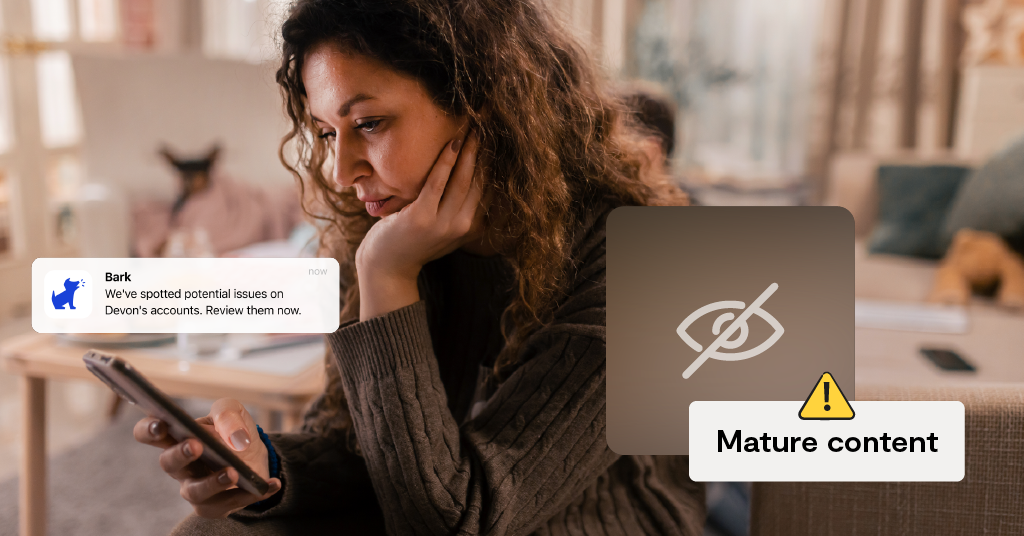
Bark’s parental controls and alerts go beyond just keeping kids safer online. They serve as conversation starters that help families — together — make sense of what children see and experience online.
When Bark flags concerning content, it gives parents a chance to pause and talk things through with their child. Parents can ask questions like “What do you think this message was trying to do?” or “How did this make you feel?” This encourages kids to reflect and question not only what happened but how they reacted.
With Bark, parents can learn how to teach kids critical thinking skills that can last a lifetime. Growing up in the digital age, this is more important than ever. Check out Bark’s product page to learn more about what we offer in the safer tech space. There’s something for kids of every age and stage.
Read more

Bark helps families manage and protect their children’s digital lives.