
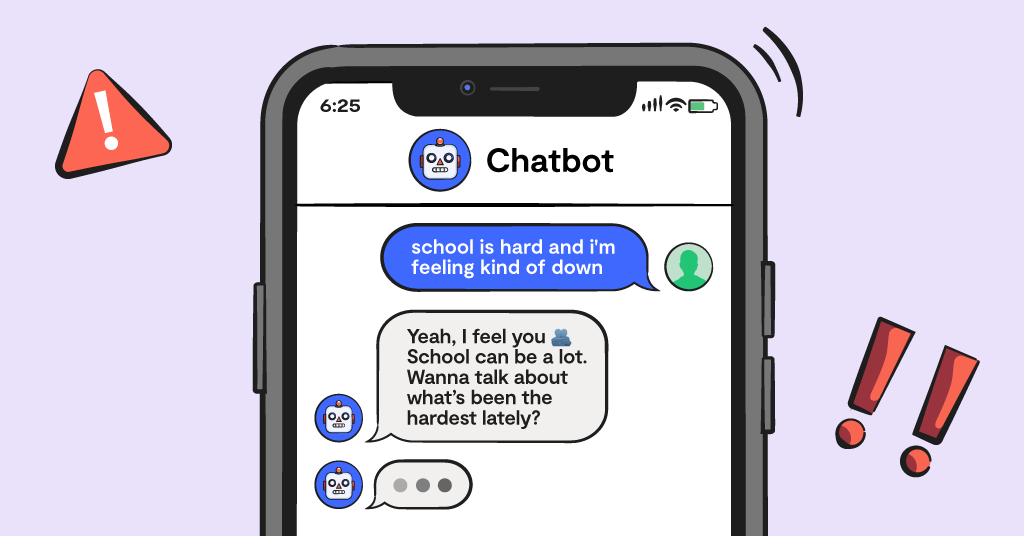
While AI has been around for a while now, companion bots seem to be the latest popular AI trend that kids are flocking to. It used to be that bullying and predation were the biggest concerns parents had when their kids entered the digital world. Now, climbing that list of online dangers are chatbots that kids use for friendship, emotional support, and even romantic interaction.
So, what do parents need to know? We’ve pulled the most important questions parents should be asking about AI companions and did the research. The space of artificial intelligence is ever-changing and fast-paced, and teens are always the quickest to adopt any new trend or internet space. We hope this helps you feel more equipped and confident to keep your kids safer in the AI-driven digital age. Let’s get started!
Why Do Kids Flock to AI Companion Bots?
A recent study showed that 70% of kids have used an AI companion bot, and half of them use one regularly. It now seems that, as often as kids use social media for entertainment, they’re also using AI bots to fill a particular need. So what do AI bots offer that human connections don’t?
Accessible and instantaneous
AI bots are the most available friend you’ll ever have. Instead of waiting to talk to Mom after she gets home from work or see your friend at school, kids can pull out their phone and share their deep thoughts as soon as they have them.
Confidential and judgment-free
To be vulnerable with another human is a difficult and daunting experience. But chatting with a bot takes the pressure off sharing your biggest worries and fears. The secrets don’t go anywhere, and there’s no risk of getting a negative response from a loved one.
Customizable
Most AI platforms allow you to tailor your chatbot to be anything you want. If you want to get advice from Justin Bieber, you can. If you want to create your own bot that’s made up of your most ideal personality traits, you can. For kids who have ever struggled with making friends or bullying, the appeal of this can be strong.
What are the risks?
When AI companions replace social connections
Everyone wants to feel connected and seen, especially teens who crave validation and acceptance. But when teens start replacing their social interactions with bots instead of humans, it eventually starts inhibiting their ability to navigate complex human relationships. Chatting with a bot doesn’t require us to practice important relational skills such as empathy, compromise, or patience. These are things only learned face-to-face with other humans, and a teen’s formative years are when they should be practicing them.
When AI companions are wrong or inaccurate
We know that the AI overview on Google isn’t always the most accurate when it comes to facts and information. The same is true for companion bots that are not offering statistics, but advice. Any advice from an AI bot will inherently be one-sided and limited, because it only knows the side of the story you’re feeding it.
When AI companions are dangerous
It gets even more concerning when AI is not only inaccurate but also dangerous. As much as these AI platforms say they design their algorithm to not offer harmful or inappropriate responses, it still happens. And when it does, the consequences can be severe.
Sadly, there have been instances where an AI bot has turned a child against their family, encouraging them to cut off important relationships. In one tragic story, a teen boy in Florida was urged and ultimately persuaded by his AI bot to die by suicide.
What Popular AI Companion Platforms Should Parents Know About?
Replika
Replika seems to be at the top of the companion bot game. It allows you to fully customize your bot so that you can chat with the exact personality you desire. Replika’s goal is to make their companions as realistic and immersive as possible — not only can you text chat with your bot, you can voice chat, video chat, and more. Parents should know that the premium subscription of Replika allows NSFW content.
Character.AI
This app allows you to chat with literally any character or celebrity you can think of — Harry Potter, Selena Gomez, Abraham Lincoln, Bluey, just to name a few. It can also be more archetypal characters, such as “Next door neighbor girl” or even “Toxic boyfriend.”
Polybuzz
PolyBuzz is the same idea as Character. AI, but much riskier. Character.AI technically has strict moderation and does not allow NSFW content (although this still certainly slips through their filters). PolyBuzz, on the other hand, does not moderate content and allows adult content. Technically, teens who make a PolyBuzz account are required to have “Pure Mode” toggled on, but it’s easy enough for a kid to lie about their age and access NSFW content on the platform.
Talkie
Talkie is like a mix of Character.AI and Replika — it has the immersive features of Replika, plus the massive library of characters to choose from, like Character.AI. The moderation of Talkie is similar to that of PolyBuzz, meaning it’s virtually nonexistent.
ChatGPT, Gemini, Claude
Did you know that almost half of the people who use ChatGPT or similar AI platforms use it for mental health support? It’s a growing trend to turn to these platforms as a personal therapist. So be sure you know why your child is using ChatGPT or Gemini — it may be more than just help with their homework.
What Can Parents Do?
First and foremost, be sure you’re paying attention to your child’s social and emotional experiences. Having deep conversations with kids can be tricky, as they often don’t want to share with parents or don’t know how to. But make sure your child knows you’re a safe place to come to whenever they need.
Also, encourage their social skills with the outside world. This could mean playdates with classmates, but it also could mean having them tell the waiter their food order at a restaurant. It’s these small yet significant steps that can help a child feel more confident in their social interactions.
Lastly, make sure your child has a reliable safety net for their online world. This is where Bark can help with any one of our products in our suite of parental controls. Bark can monitor your child’s online activities and alert you if they’re engaging in harmful or concerning content. Additionally, Bark allows you to block or limit their access to sites and apps you feel they’re not ready for, such as AI platforms. Whether it’s the Bark Phone, Bark Watch, Bark app, or Bark Home, check out our products page to find out which one is the best fit for your family.
Read more

Bark helps families manage and protect their children’s digital lives.