If you have a gamer in the house, you probably know the soundtrack: excited yelling, complaints about lag, and “just one more round” when dinner’s ready. For many kids, online gaming is as much about teaming up with friends, sharing adventures, and making memories as it is about winning. But sometimes, in the middle of a mission or a close race, the conversation takes a turn that leaves your kid logging off upset.
It’s a tricky spot for parents. Games have their own language, and friendly competition can get loud. You don’t want to turn every heated moment into a family meeting, but you also don’t want your child thinking that being treated badly is the price of playing with friends. Understanding bullying in video games means looking beyond the volume. Below, we dive into how to recognize bullying in online games, spot changes worth asking about, and help your child feel comfortable coming to you.
Why Online Games Can Be a Breeding Ground for Bullying
For kids, online multiplayer games are today’s hangout spots. They’re building worlds, making plans, and spending time with classmates and strangers alike. That connection can be wonderful. It can also bring school drama home or put kids alongside players who take competition too far. Add anonymity and instant voice chat with no paper trail, and it becomes easy to throw around insults and hurtful comments in the heat of the moment.
Unfortunately, this lack of accountability and oversight continues to contribute to a growing atmosphere of hate and harassment online. In a 2023 gaming survey, the Anti-Defamation League found that roughly 75% of gamers ages 10–17 experienced harassment in online multiplayer games. From misogyny to racist remarks, online harassment and bullying continue to take many shapes.
Trash Talk vs. Cyberbullying in Video Games
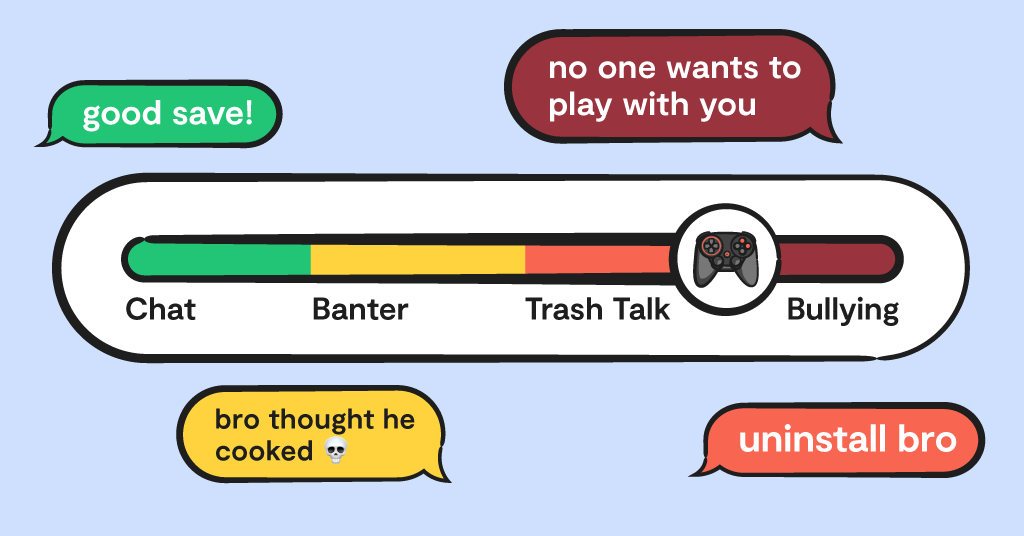
With so much of online gaming culture centered around competitiveness and conversation, it can be hard to tell playful trash talk from targeted bullying. To help you and your child find the line, it can be helpful to ask some context questions around who’s laughing. Who’s being singled out, and what happens when they're asked to stop.
Friendly trash talk generally:
- Stays focused on the game.
- Goes both ways, with everyone comfortable participating.
- Stops when someone has had enough and doesn’t follow them afterward.
On the other hand, bullying in video games can look like:
- Personal attacks: Mocking someone’s appearance, race, gender, sexuality, disability, religion, or family.
- Repeated targeting: Blaming the same child every round or organizing others to pile on.
- Deliberate humiliation or exclusion: Inviting a child into a group just to ridicule and remove them, again and again.
- Harassment that follows them: Moving insults into Discord, direct messages, or school.
- Threats or intimidation: Sharing private information, threatening harm, or telling someone to hurt themselves.
Other cyberbullying examples involve gameplay itself. The new popular phrase “griefing in games” means deliberately spoiling someone else’s experience, such as destroying their builds or sabotaging their team. One frustrating encounter isn’t automatically bullying; repeatedly pursuing one child to ruin their games can be.
But you don’t need to wait for a pattern before responding to a threat or serious incident. A useful gut check looks like asking: “Would this be okay if someone said it to my child’s face on the playground?” then asking your child how it felt.
Signs of Cyberbullying in Gamers
It’s not easy to share when someone has hurt your feelings, even less so when you’re worried telling someone might be the loss of your game, your friend group, or both. Rather than waiting for your kid to come to you with cyberbullying concerns, watch out for changes in their behavior and then be inquisitive, not judgemental.
Some signs of toxic gaming or cyberbullying to look out for include:
- Suddenly abandoning a favorite game or only playing solo.
- Seeming upset, angry, or withdrawn after playing.
- Changing usernames or muting conversations unexpectedly.
- Avoiding certain friends or school.
- Changes in sleep, appetite, or willingness to discuss who they play with.
None of these proves cyberbullying in video games is happening. Muting someone can be a healthy boundary! Start with an observation: “You seemed upset after that match. Was it the game, or something someone said?”
Listen to your child’s own comments, too. If they’re joining a pile-on, address the behavior without labeling them a bad kid. Talk about stopping, making amends, and speaking up when friends go too far.
What to Do When Gaming Bullying Crosses a Line
If your child does come to you with a concern or for advice after getting bullied online, it can be helpful to take it step by step.
Start with reassurance. Try: “I’m glad you told me. You haven’t done anything wrong by asking for help.” Listen before deciding what needs to change, and involve your child in the next steps.
Practice muting, blocking, and reporting together. Find those tools before the next match. Remind your child that leaving an unpleasant group is allowed, even if friends call it overreacting.
Keep a record when possible. Save usernames, dates, screenshots, and relevant messages. Check whether the platform offers voice reporting or clips; gameplay recordings don’t always include chat audio. Your child doesn’t need to stay in a harmful conversation to collect proof.
Review communication settings. Limit chat to known friends where available, or disable it. For Roblox voice chat, eligibility depends on age checks and other requirements. If you’re wondering how to turn off voice chat on Roblox, its current guidance includes an in-game Voice Chat toggle. Review console controls through PlayStation, Xbox, or Nintendo, too.
Make breaks supportive. Agree on a stopping time and something enjoyable afterward. Bark Home connects to a compatible router to schedule or pause internet access on home devices, including gaming consoles. Explain that a break gives them breathing room, and keep addressing the behavior that hurt them.
Bring in help when needed. Contact the school if classmates are involved. Threats, stalking, or sexual exploitation may require law enforcement; immediate danger warrants emergency help. If distress continues, a pediatrician or counselor can help your child work through it.
Help Your Kid Keep Gaming Fun
You don’t need to master Fortnite to support your gamer. Sit in on a match, ask what they enjoy, and get to know who they play with. Those small moments make harder conversations easier. For extra support with online gaming safety for kids, start a seven-day free trial of the Bark app or explore which product fits your family, including Bark Home, the Bark Phone, and the Bark app for Android and iOS.
Read more

Bark helps families manage and protect their children’s digital lives.