
**This blog post was updated on April 8, 2024.**
If you’ve heard about sextortion, you know that it’s a potentially devastating crime that can have lifelong repercussions on a family. And if you’ve experienced it firsthand, you’re probably scared, frustrated, and angry. In this blog post, we’ll give you some resources to better understand what it is, along with links to the laws of different states that may address it.
What Is Sextortion?
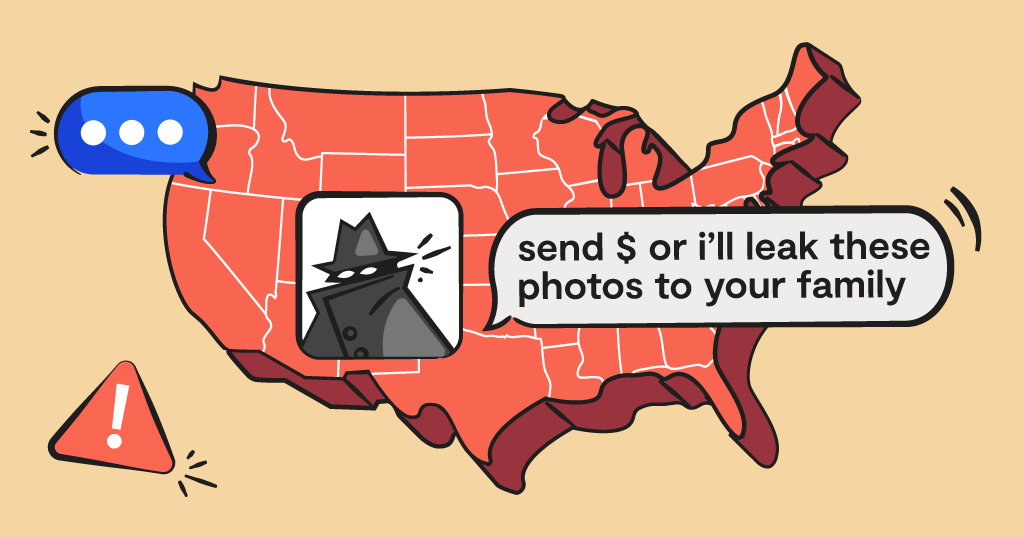
Sextortion is a combination of the words “sex” and “extortion” — extortion is using threats or force to coerce someone into doing something. In the case of sextortion, a person is threatened that their nude photos will be released unless they:
- Provide money or valuables
- Give more sexual photos
- Perform sexual acts
The bad actor may have gotten a person’s nude photos with permission or without, in the case of a hacked phone or computer. Individuals can feel immense shame in cases of sextortion, afraid that their family will see the photos and judge them.
Boys Can Be Especially at Risk
While anyone of any age can become a victim of sextortion, there’s been a recent trend of boys being targeted. In these cases, boys are contacted by what they think are young girls. In reality, it’s scammers hoping to extort money or photos from them after requesting and receiving nude photos from the boys. The results of these schemes have been truly devastating. According to the FBI, more than a dozen boys died by suicide after becoming sextortion victims.
What to Do If You Encounter Sextortion
Thorn has provided a helpful infographic with what to do if you encounter sextortion. Here are a few of the tips:
Know that you’ve done nothing wrong
Stop responding to the blackmailer and block them. There’s no guarantee that if you comply with their requests they’ll stop. They’re the ones engaging in crime — even if you’ve sent photos or videos willingly before.
Get support
Text "THORN" to 741741 to speak with a trained counselor who can help you make sense of the situation, validate your concerns, and provide you with options;
Report it
Tech companies can help you remove images and videos from the internet. This removal guide provides details on how to get started. When you state that you’re under 18, companies can take more aggressive actions since you’re underage.
Save all the evidence
Keep a record of all your interactions — take screenshots, download and save photos and videos, and anything else that helps paint a picture of what’s been happening.
How States Prosecute Sextortion
Some states, recognizing how dangerous and devastating sextortion can be to people, have passed laws addressing sextortion specifically. Other states that don’t have specific laws governing it may use traditional extortion or blackmail statutes to nab perpetrators, in addition to child abuse sexual material charges if the victim is underage.
Need Help Preventing Sextortion?
Bark’s advanced content monitoring scans your child’s photos, videos, text messages, and social media accounts for signs of potential dangers — including sextortion. If your child is exchanging sexual content or receiving threats, you can get an alert so you can check in and make sure everything’s okay.
State-by-State Sextortion Laws
The following links do not constitute legal advice of any kid. They serve as a starting point to guide families to specific sextortion laws where applicable and to traditional extortion, coercion, or other possible statutes in states that don’t have specific sextortion laws. If you have questions about possible sextortion, contact a licensed attorney in your state of residence.
- Alabama
- Alaska
- Arizona
- Arkansas
- California
- Colorado
- Connecticut
- Delaware
- Florida
- Georgia
- Hawaii
- Idaho
- Illinois
- Indiana
- Iowa
- Kansas
- Kentucky
- Louisiana
- Maine
- Maryland
- Massachusetts
- Michigan
- Minnesota
- Mississippi
- Missouri
- Montana
- Nebraska
- Nevada
- New Hampshire
- New Jersey
- New Mexico
- New York
- North Carolina
- North Dakota
- Ohio
- Oklahoma
- Oregon
- Pennsylvania
- Rhode Island
- South Carolina
- South Dakota
- Tennessee
- Texas
- Utah
- Vermont
- Virginia
- Washington
- West Virginia
- Wisconsin
- Wyoming
Read more



Bark helps families manage and protect their children’s digital lives.