
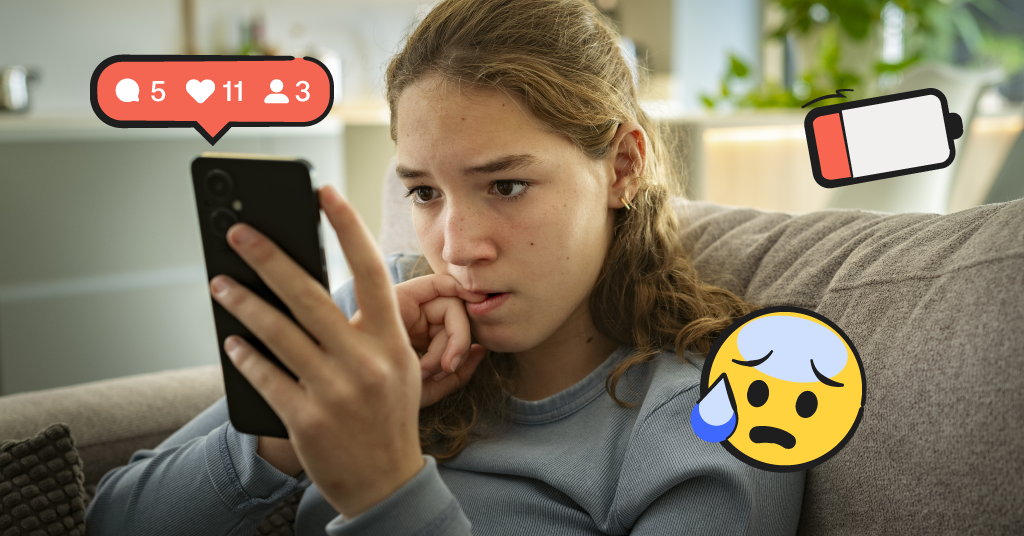
As a parent, you probably know that social media isn’t great for your child. The U.S. surgeon general even drafted an eye-opening op-ed in The New York Times in 2023, sounding the alarm on the link between social media and mental health. The TL;DR? He thinks these platforms should come with a warning label like the kinds placed on cigarettes and alcohol — that’s how damaging they are.
To help illuminate just how problematic social media really is for young people, we’ve compiled a list of 10 common ways it triggers anxiety in kids. This way, you can get a better understanding of it and present a stronger front when your child pressures you to download a new app or platform.
10 Ways Social Media Causes Anxiety in Kids
Comparison culture
Oftentimes, when people post on social media, they’re carefully curating a “highlight” reel of vacations, nights out, or special events. What you don’t see are arguments, bad moods, or breakups. When kids get social media, they can feel bad if their lived experiences aren’t matching up to the picture-perfect things they see friends, celebrities, or influencers posting online.
Fear of missing out (FOMO)
Following on the heels of comparison culture is FOMO, or the worry and anxiety that what you’re doing isn’t good enough, whether that’s hanging out with friends or taking a family trip to Disney World. But more specifically, kids are especially vulnerable to feeling left out if they see a TikTok or Instagram story where they were the only one not invited to a sleepover, for example.
Cyberbullying and harassment
Unlike the bullying of days past, cyberbullying can happen 24/7 and anywhere a child takes their phone. This means that a kid can face constant fear and anxiety that aggressive messages will follow them around. In Bark’s 2024 annual report, 77% of teens and 71% of tweens experienced cyberbullying as a result of being online, showing that it’s an ever-present issue they face from these types of platforms.
Pressure to be “perfect” online
Kids don’t always have the coping skills to easily brush off criticism from missteps or embarrassing posts online, which can lead them to overthink and be anxious about every single post they share on social media. Measuring your self-worth in likes, comments, and reposts can result in diminished self-esteem, and it’s a fickle ecosystem to dwell in.
Information overload
The endless algorithmic scrolls of social media expose kids to an extraordinary amount of information from the real world, from the latest news headlines to clickbait-y posts meant to keep them online for hours at a time. Humans probably weren’t meant to see and hear opinions from millions of people 24/7, and kids can easily get overwhelmed with hot takes, reaction videos, and misinformation overload.
Fear of public embarrassment
Middle schoolers today are walking around with high-definition smartphone cameras in their pockets that are ready to capture any embarrassing moment or bad hair day from their fellow classmates. These photos and videos can then be shared instantly with the entire school — and the entire world — and may even end up as memes or viral jokes. This is something that adults who didn’t grow up on the internet can barely imagine, and it’s a scary reality that adolescents face every day.
Constant notification and dopamine loops
Social media companies design their apps to be addictive — that’s why you feel compelled to keep coming back and looking for notifications. Kids aren’t immune to this, either, which is reflected in their skyrocketing screen time rates. To get that hit of dopamine when you see a like or a comment, or even to just avoid FOMO, children check and recheck their social media apps, all while getting constantly pinged by notifications. Most platforms will even send a notification if you haven’t logged in for a while, betraying the app’s real intention: the demand for constant presence.
Exposure to distressing content
Graphic violence, hate speech, porn — these are just a few of the upsetting things that kids can stumble across while browsing social media. On heavy news days, as in the case of school shootings, kids’ anxiety can be ramped up as they consume videos, think pieces, and other emotional responses to the day’s events. The anxiety they’re feeling is amplified by the even more anxiety-producing content that the algorithms continually feed them.
Loss of real-life connection
Kids may think online friendships are just as good as in-person relationships, but they’re no substitutes for the real thing. And whether they realize it or not, missing out on the kind of bonding that occurs in person may be contributing to loneliness and feelings of isolation.
Sleep disruption
Excessive screen time, especially right before bed, can drastically affect the quality of your child’s sleep, according to the American Academy of Pediatrics. Social media triggers like the FOMO and bullying we mentioned earlier can make it hard for kids to unwind, leaving their minds racing long after they’ve put their phones down. On top of that, the blue light emitted from screens suppresses melatonin — the hormone that helps signal it’s time for sleep — which can make it harder for them to fall and stay asleep.
How Bark Can Help
If reading through this list made you more concerned about social media, you’re not alone. The good news is that there are ways to help protect your child’s mental health while they navigate growing up online. Bark helps families monitor for issues like cyberbullying, anxiety, depression, and more, all while giving parents insights into what’s really happening in their child’s digital world.
Our advanced, AI-powered technology scans texts, emails, and social media platforms for potential risks, and it alerts you if something concerning pops up. This empowers you to step in with support and guidance before things spiral into full-blown anxiety.
You can also use Bark’s built-in parental controls to set screen time limits, block harmful apps or websites, and encourage healthy tech habits like putting phones away before bed. Because at the end of the day, kids deserve a childhood that feels calm, connected, and safe, both online and in real life.
Read more
Bark helps families manage and protect their children’s digital lives.