
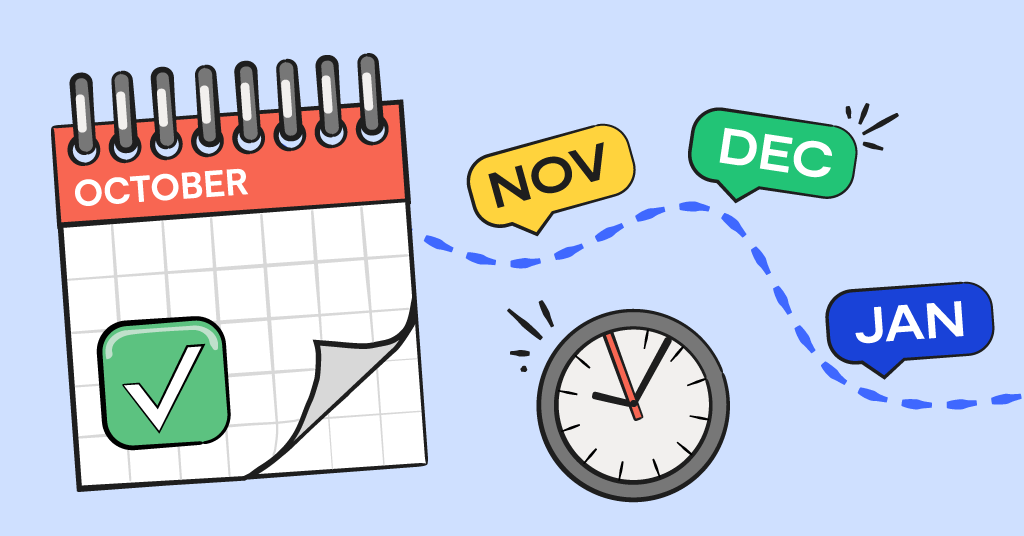
On a district community council agenda posted this past February, buried in a timeline of due dates, sat two lines back-to-back: "Digital Citizenship – October, 2025 – done." "Safe School Walking Routes – November, 2025 – done."
Then the agenda moved on. Budget reviews. Mid-year data. Land trust reports. Digital citizenship didn't appear again for the rest of the school year.
Nothing about this is unusual. It's exactly how the calendar is supposed to work: pick a month, cover the topic, mark it complete, move to the next line item. Most districts run some version of this same cycle every October, whether it's tied to Digital Citizenship Week, a parent night, or a staff PD session. The assembly happens. The newsletter goes out. The box gets checked.
The problem isn't checking the box. The problem is what happens to a topic once it's marked done.
What Gets Lost When The Box Gets Checked
To be fair, this isn't a failure of intent. October is already crowded. Districts are running parent-teacher conferences, fall assessments, and a half dozen other observance months at the same time as Digital Citizenship Week. Treating the topic as a discrete, completable task is often the only way it gets covered. Nobody is being careless. They're being realistic about bandwidth.
But realistic scheduling has a side effect. Once something is marked done, it stops competing for attention. And a topic like online safety, judgment, disclosure, how to handle a situation with no adult around, doesn't work on a once-a-year clock. It needs to still be true in February.
That's the real test of any online safety effort, not whether it happened, but whether it's still true months later. And "still true" doesn't show up in October. It shows up in the months nobody is watching.
Signs That The Message Stuck
A few markers separate the districts where the topic survived from the ones where it quietly expired on the calendar:
It shows up somewhere other than the annual slot.
Not a second assembly, not a repeat of the same PD session, but a small, recurring touchpoint: a five-minute check-in folded into an existing staff meeting, a line in a family newsletter that already goes out monthly, a classroom routine a teacher runs without being told to. Picture a fifth-grade team that already has a Friday morning check-in for reading logs. The strongest version of this isn't a new October initiative; it's a standing two-minute slot in that same Friday meeting where a teacher shares one thing a student brought up that week: no new calendar entry required, just a seat at a table that already exists.
Pro tip: Most districts already have a data source for this and don't use it. If you have any kind of monitoring or filtering system in place, IT is sitting on real signals about what students are actually running into online: categories, frequency, timing. That data almost never leaves the IT department. Pulling it into the conversation with counselors, teachers, or your safety team turns "digital citizenship" from a once-a-year topic owned by one person into a team effort grounded in what's actually happening at your school, not what happened nationally last year. If you don't have monitoring in place, this is worth exploring on its own, if only to find out what you don't currently know.
Staff references it without being prompted.
If a teacher brings up something from October's training in March, unprompted, that signals the material landed somewhere durable. If it only resurfaces when an administrator specifically asks, "Did we cover this?" it didn't land. It was attended.
Kids bring it up on their own terms.
Not reciting a rule back on a quiz, but naming a situation from their own life, in language that shows they're actually applying judgment rather than reciting a script. That's the difference between compliance and comprehension, and it's the only version of digital citizenship that holds up once no adult is in the room.
Make Digital Citizenship an Ongoing Conversation
None of this requires a bigger program or a longer training day. It requires treating October as a starting point instead of a finish line, which is a scheduling decision more than a curriculum decision. The five-minute Friday check-in costs nothing new. It just needs someone to decide it belongs on a calendar that already exists.
Go back to that community council agenda. Nobody did anything wrong by marking digital citizenship "done" in October. That's what the form asked for. But a form only tracks what happened. It was never designed to track what's still true.
"Done" is the right word for a form. It's the wrong word for a habit. The districts worth learning from aren't the ones with the cleanest October. They're the ones where nobody could tell you when the conversation around digital citizenship "ended," because it never did.
Read more



Bark helps families manage and protect their children’s digital lives.