
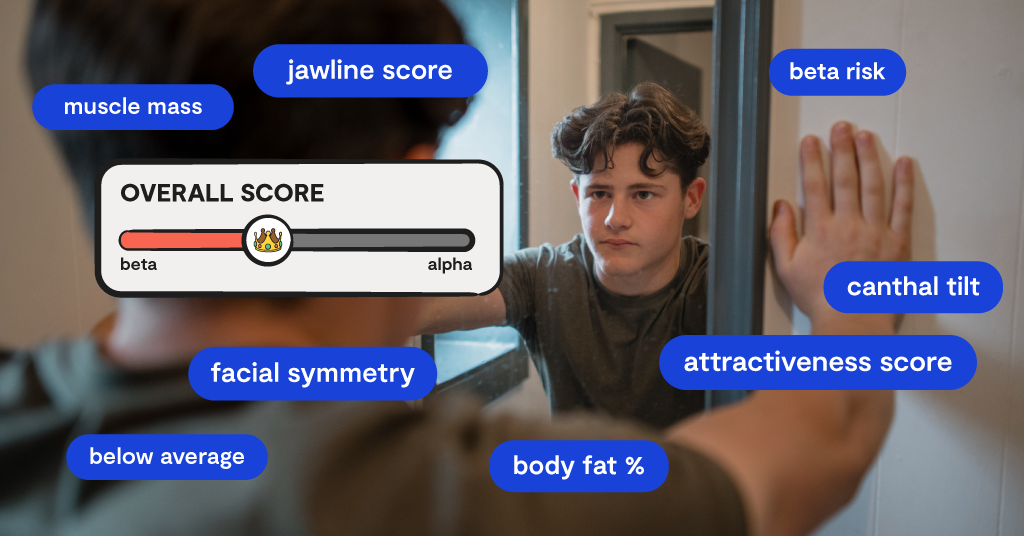
If your child has ever talked about “glowing up,” fixing their jawline, getting “rated,” or becoming more attractive online, they may have come across looksmaxxing. The term may sound silly at first, but some of the content behind it can get intense fast.
Looksmaxxing is internet slang for trying to improve your appearance as much as possible. Sometimes, it’s relatively harmless — things like better hygiene, skincare, haircuts, exercise, or learning how to dress with more confidence. But in some online spaces, looksmaxxing can become obsessive, shame-based, and even dangerous for kids and teens.
Here’s what parents need to know about looksmaxxing, why it appeals to young people, and the warning signs that it may be affecting your child’s mental health.
What Is Looksmaxxing?
Looksmaxxing is a term used online to describe efforts to “maximize” physical attractiveness. Kids and teens may see content about:
- Skincare routines
- Haircuts and grooming
- Fitness and posture
- Fashion advice
- Diet and body composition
- Facial symmetry
- “Before and after” glow-up videos
- Jawline, cheekbone, or facial structure tips
- Photo editing and posing advice
On the surface, some of this content can look like normal self-improvement. Many kids care about their appearance, especially as they get older. Wanting a new haircut, trying a face wash, or learning how to take care of your skin is not automatically a problem.
The concern is what can happen when looksmaxxing content teaches kids that their appearance determines their worth.
Why Looksmaxxing Can Appeal to Teens
The teen years are already filled with big changes. Kids are figuring out who they are, where they fit in, and how others see them. Add social media to the mix, and appearance can start to feel like a full-time performance.
Looksmaxxing content can be appealing because it promises control. It tells kids, “If you just do these things, people will like you more.” For a teen who feels awkward, insecure, lonely, or left out, that can be a powerful message.
It also fits perfectly into social media culture. Short videos, dramatic transformations, filters, and “rate me” posts can make appearance feel measurable. The more a child watches, the more their feed may serve up similar content.
When Looksmaxxing Becomes Harmful
Looksmaxxing becomes concerning when it shifts from healthy self-care to constant self-criticism. This can happen gradually, so parents may not notice it right away. Here are some of the biggest risks to watch for.
It Can Increase Body Image Issues
Looksmaxxing content often focuses on tiny details: the shape of a nose, the angle of a jaw, the width of a face, the size of someone’s eyes, or whether their body fits a certain ideal.
For kids, this can create a habit of scanning themselves for flaws. They may start comparing themselves to influencers, edited photos, or strangers online. Over time, they may believe they need to “fix” normal parts of their face or body.
This can be especially difficult because many online images are filtered, posed, edited, or carefully lit. Kids may be comparing their everyday selves to content that is not fully real.
It Can Encourage Obsessive Habits
Some looksmaxxing advice is basic personal care. But other content can push kids toward extreme routines or constant monitoring.
A child may begin:
- Checking mirrors repeatedly
- Taking and deleting dozens of selfies
- Measuring parts of their face or body
- Asking others to rate their appearance
- Spending excessive time researching “flaws”
- Avoiding photos or social situations
- Feeling distressed if they miss a routine
When appearance starts taking up a huge amount of mental space, it may be time to step in.
It Can Affect Eating and Exercise Habits
Some looksmaxxing content overlaps with diet, weight loss, muscle building, or body “optimization.” That can be risky for kids and teens, whose bodies are still growing.
Parents should pay attention if a child suddenly becomes very rigid about food, skips meals, cuts out large food groups, exercises compulsively, or expresses fear about gaining weight. Even if the content doesn’t explicitly promote disordered eating, it may still feed unhealthy beliefs about bodies and self-worth.
It Can Expose Kids to Toxic Online Communities
Not every looksmaxxing video is harmful. But some online communities connected to the term can be harsh, judgmental, and cruel.
Kids may encounter comments or forums that rank people’s attractiveness, mock specific facial features, or claim that dating and social success are determined almost entirely by looks.
This kind of content can make kids feel hopeless, angry, ashamed, or resentful.
It Can Make Boys Feel Pressure, Too
Body image conversations often focus on girls, but looksmaxxing is a reminder that boys are also under pressure. Boys may see content about height, muscles, jawlines, hairlines, facial structure, and masculinity. Some spaces may also overlap with misogynistic or manosphere-adjacent content, especially when aimed at boys.
Some boys may feel embarrassed to talk about appearance insecurity because they think they’re not “supposed” to care. That can make it harder for parents to notice when something is wrong.
If your son is suddenly making harsh comments about his face, body, height, or ability to attract attention, don’t brush it off as typical teen behavior. It may be worth a deeper conversation.
Warning Signs Parents Should Watch For
Looksmaxxing content may be affecting your child if you notice:
- More negative comments about their appearance
- Sudden obsession with a specific facial feature or body part
- Repeatedly asking if they’re ugly, attractive, skinny, muscular, or “normal”
- Avoiding pictures, mirrors, school, or social events
- Extreme changes in diet, exercise, grooming, or sleep
- Increased secrecy around social media use
- Following accounts that focus heavily on body ranking or appearance “fixes”
- Mood changes after using social media
- Harsh comparisons to influencers, classmates, or celebrities
- Comments like “I’ll never be attractive” or “There’s no point”
You know your child best. A single new skincare routine is probably not a crisis. But a pattern of distress, secrecy, or self-hate deserves attention.
How to Talk to Your Child About Looksmaxxing
The goal is not to shame your child for caring about their appearance. Most people care about how they look, and teens are especially sensitive to peer approval.
Try opening with curiosity instead of criticism:
- “Have you heard the term looksmaxxing before?”
- “What kinds of videos are people sharing about it?”
- “Do you think most of that advice is helpful, or does some of it feel intense?”
- “How do you feel after watching that kind of content?”
- “Are people at school talking about this?”
If your child opens up, resist the urge to lecture, but listen first. Then help them separate healthy self-care from harmful self-criticism. You might say something like: “It’s completely normal to want to feel confident. I just don’t want the internet convincing you that you’re a problem to be fixed.”
How Bark Can Help
Looksmaxxing can be tricky because it may not always look dangerous at first. A skincare video, fitness tip, or haircut tutorial may be completely harmless. But when kids start seeing content that promotes body shame, unhealthy comparison, bullying, or extreme behavior, parents need to know.
Bark can help families stay informed about potential online issues, including concerning body image content. Check out our suite of tools that help parents manage screen time, block websites and apps, and monitor for potential dangers. Bark gives families a way to support kids as they navigate complicated online spaces.
Read more


Bark helps families manage and protect their children’s digital lives.