
 Kids and Technology
To Teens From Bark: How To Actually Tell If You’re Talking to a Real Person Online
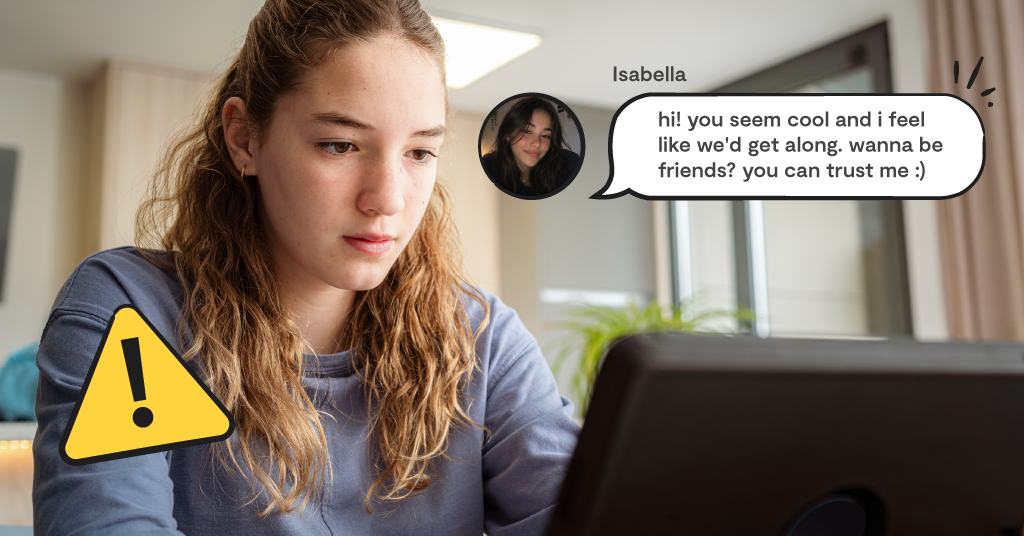
Today, more and more conversations and friendships begin online, whether it’s through a comment section, multiplayer game or shared interest. Maybe someone you meet slides into your DMs, and the conversation clicks right away. They get your jokes, like the same things you do, and always seem to have the perfect response. But when every smooth reply comes almost instantly, you might start to wonder: Is there actually a real person behind this account?
It’s a fair question. AI bots are getting harder to spot, and catfish accounts can look completely legit. You don’t need to investigate every new follower, but a few quick checks can help you notice when something isn’t adding up. Here’s how to figure out who or what you’re really talking to and what’s okay to share, bot or no.
Red Flags That Someone (or Something) Isn’t What They Seem
There’s no single message that instantly proves an account is fake. What matters is whether a pattern starts to form. Here are some earlier signs that the person you’re talking to may not be who they claim:
- They respond instantly at all hours. Real people sleep, go to school, and occasionally forget where they put their phones. If someone is always available, it’s worth questioning.
- Every message sounds a little too perfect. Flawless grammar isn’t automatically suspicious, but bots may write in a way that feels unusually formal or generic for the conversation.
- They dodge personal questions. They may give vague answers, change the subject, or turn every question back on you.
- They want to leave the platform immediately. Be careful if someone quickly pushes you toward a private messaging app, especially one with disappearing messages. Moving the conversation can make their account harder to report and your messages harder to recover.
- They become intense very quickly. Huge compliments, nonstop attention, and declarations that you’re the only person who understands them can feel flattering. But when someone tries to build trust or emotional attachment within days, slow things down.
Quick Tests You Can Run if You Feel Something Might Be Off
You don’t need special software to check whether someone’s story holds up. Try a few questions that require more than a polished, automatic response:
- Ask something oddly specific. Instead of “How was your day?” try, “What was the funniest thing that happened in your third-period class?” A real person can usually add small, natural details. A bot or scripted account may answer vaguely.
- Ask the same question again later. Reword something they’ve already answered and see whether the details stay consistent. Everyone forgets things occasionally, but major changes in their age, location, school, or family deserve attention.
- Follow up on an earlier detail. If they mentioned a soccer game, audition, or argument with a friend, ask about it a few days later. Genuine conversations build on shared memory. Fake accounts may lose track of what they told you.
- Bring up something current and specific. Ask about a recent local event, school announcement, or inside joke from your conversation. Just remember that AI can access current information, so one correct answer doesn’t prove anything. You’re looking at the full pattern.
- Ask how something made them feel, then dig deeper. Bots are good at producing emotional-sounding language, but their answers may sound supportive without actually saying much. A thoughtful follow-up can reveal whether the person really understands the situation.
None of these tests is foolproof on its own. Their real value is showing whether the person can maintain a believable, consistent conversation over time.
When It’s an AI Companion Bot, Not a Catfish
Sometimes, no one is secretly pretending to be a real person. Apps like Character.AI, Replika, Talkie, and Snapchat’s My AI openly use chatbots designed to hold conversations. Depending on the app, the bot may act like a friend, fictional character, or romantic partner. That may sound less risky than a catfish, but the emotional line can still get blurry. The American Psychological Association explains that these bots are designed to simulate empathy and provide constant, nonjudgmental responses. That endless attention can make it easier to overshare, become emotionally dependent, or start trusting advice from a system that doesn’t truly understand you or care what happens next.
Why This Matters More Than It Used To
Fake accounts have existed for years. What’s changed is how easy it has become to make them convincing. The FTC warns that scammers can clone someone’s voice from a short audio sample, while the FBI has documented AI-generated video used during real-time calls to make fake identities appear legitimate. Falling for one doesn’t make you naive. These tools are designed to be convincing, which is why knowing when to pause, verify, and get a second opinion matters.
What to Do If You Think You’re Talking to a Bot or Fake Account
Once you suspect an account is fake, you don’t need to keep testing it to prove you’re right. Continuing the conversation may give the account more information or another chance to pressure you. Focus on protecting yourself first, then save what you may need to make a report. The FTC recommends immediately ending contact with suspected scammers and talking to someone you trust.
- Stop responding. You don’t owe the account an explanation, and you don’t need to announce that you’ve figured them out.
- Don’t send anything else. That includes money, game credits, passwords, verification codes, personal details, or private photos.
- Take screenshots. Save the username, profile, messages, and any requests or threats before blocking the account. This gives you a record if the profile disappears.
- Report and block the account. Use the platform’s reporting tools and choose the reason that best fits, such as impersonation, scam, spam, or harassment. Reporting isn’t tattling. It may keep the same account from targeting someone else.
- Tell a trusted adult. Yes, it might feel awkward. But a parent, counselor, or other trusted adult can help you protect your information and decide what needs to happen next. This is especially important if the person has threatened you, asked for sexual images, or already has private information about you.
If sexual images, threats or possible exploitation are involved, you or a trusted adult can also make a report through the National Center for Missing & Exploited Children’s CyberTipline.
Remember: You Got This!
You shouldn’t have to figure all of this out alone. Having a digital safety net doesn’t have to mean giving up all your privacy. It means having backup when a conversation becomes unsafe, confusing, or too difficult to handle by yourself. If your parents use a parental control app like Bark, it can help them notice warning signs you might not catch on your own.
We hope this gives you more confidence to navigate the online world. Stay safe!
Read more
Bark helps families manage and protect their children’s digital lives.
