
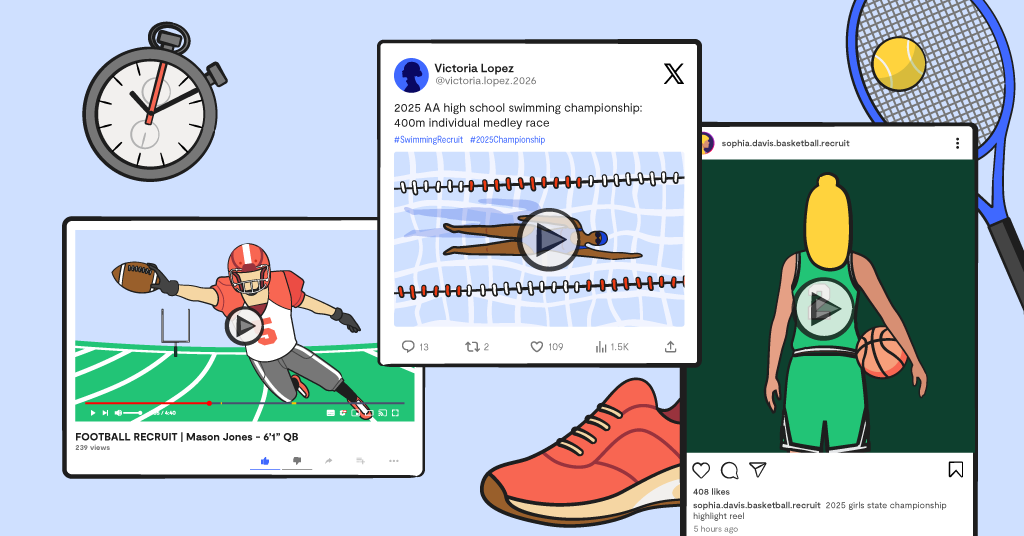
The use and influence of social media are found just about everywhere, and college sports are no exception. In recent years, it’s become a staple of the recruitment process for college coaches to scout talent through social media.
For parents of student athletes, this creates a dilemma: How do you allow your child to have a social media presence for recruitment and still keep them safe from the known dangers of these platforms? It’s a unique situation, and we’re here to help you navigate it with all the information and best practices you need. Let’s begin!
Recruitment in the Digital Age: How It Works
In decades past, college recruiters would either make the rounds to high schools in person to watch games and practices or rely on mailed tapes of a student’s highlight reel. Now, along with the rest of the world, scouting has gone digital. Students are posting their highlight reels to social media, and college recruiters and coaches are scouring apps like Instagram, X, and YouTube to find their next cohort of athletes.
For coaches, social media gives them the benefit of finding two things about their prospective athletes: talent and character. Of course, they’re looking at a baseball player’s strikeout-to-walk ratio, but they also want to see students who are respectable, humble, and well-rounded.
How Social Media Can Benefit Your Teen Athlete
A more accessible way for young athletes to get noticed
Social media gives young athletes — especially those from smaller or easily overlooked schools — the chance to get in front of a national audience. It evens the playing field for all talent to get recognized, so to speak. Teens can get noticed by recruiters from across the country with a simple YouTube video of their best game.
A way for students to network and research the schools they’re interested in
Students can also scout the schools they want to set their sights on. They can find the profiles for coaches, former athletes, and current athletes to get a feel for the culture of a particular school. They can also interact with coaches through comments and DMs to make an even more direct impression than just their profiles.
An opportunity to teach teens about healthy social media use
This is a great way to teach kids how to use social media in a healthy and appropriate way, as it shows how social media can be used to support a specific purpose, as opposed to just entertainment or social connection. As they learn to interact with coaches and recruiters in a professional manner, it will become great practice for networking in their future careers.
The Risks Parents Should Know
You’re likely already aware of the risks that come with social media, but there are some specific dangers student athletes could encounter while building their social media presence for recruiting.
Privacy risks
If your goal is to increase your child’s visibility to college coaches, the reality is that their social media is going to have to be public. This means their face, name, email, name of their high school, and other sensitive information will be public to the whole world.
Bullying
Don’t be surprised if your child’s sports account gets rude comments, replies, or DMs. Internet trolls are as old as the internet itself, and unfortunately, student athletes who are just trying to get a scholarship for college are not immune to internet hate.
Scams and sextortion
Also prevalent are scammers who will find their way into any DMs they can. Scammers are known to target teens since they may be more easily manipulated into falling for their schemes.
Parents will also want to be aware of sex bots and sextortion schemers who are known to target teens’ social media — especially those of young men. When an account is public, it’s easy for scammers to simply follow your teen’s social media and DM them. Unfortunately, this is how teens could end up getting groomed or exposed to pornography.
Looking for Social Media Alternatives?
You may be wondering if there are any apps or platforms dedicated to young athletes trying to get recruited that are separate from social media. The answer is yes, and some examples include Hudl, FieldLevel, and NCSA. Many of these offer free services, as well as a paid subscription that promises extra features. They also offer more privacy, as your child’s sensitive information is only viewable by coaches.
But it’s worth noting that these platforms are hard-pressed to fully replace social media in the recruiting process — they simply don’t have the same reach and accessibility as a public Instagram or X profile.
Best Practices
If you’ve decided to take on the task of creating your child’s social media presence for college scouting purposes, here are some best practices to get your athlete started on the right foot.
Keep personal and professional accounts separate
Whether or not your child already has personal social media, create new accounts that are just dedicated to recruiting and networking. Consider even creating a separate email account that is used for communicating with coaches and recruiters. For any new accounts, be sure that you have all the login information! This will allow you to help your child keep up with engagement, as well as moderate for any suspicious or concerning activity.
Be familiar with the safety and parental controls features on various social media platforms
Whatever platforms you and your child use, be sure you know how to block, report, or mute accounts that appear nefarious. If you want to make sure your child isn’t tempted to be on these social media apps for too long, consider setting up time limits so they don’t get carried away.
Here are some helpful guides to the popular platforms used for college recruiting:
Have open discussions with your child
The best approach is to have this be more of a collaboration with you and your child. If you both have access to the login information, then you both should be on the same page about what gets posted, shared, commented, messaged, etc. Make sure they’re aware that you’ll have full visibility for their safety, and teach them how to spot a scammer so they don’t get tricked by a deceptive DM or comment.
How Bark Can Help Protect Your Young Athletes
Keeping your child safe online is a difficult task, and even more difficult while you’re also trying to help them achieve their biggest dreams. This is where Bark comes in, as a powerful tool to give you peace of mind in your child’s online safety. Bark can help you monitor, block, and manage your child’s screen time across tons of platforms. Check out Bark’s variety of products, including the Bark Phone, the Bark Watch, the Bark app, and the Bark Home to see which one is the best fit for your family.
Read more



Bark helps families manage and protect their children’s digital lives.