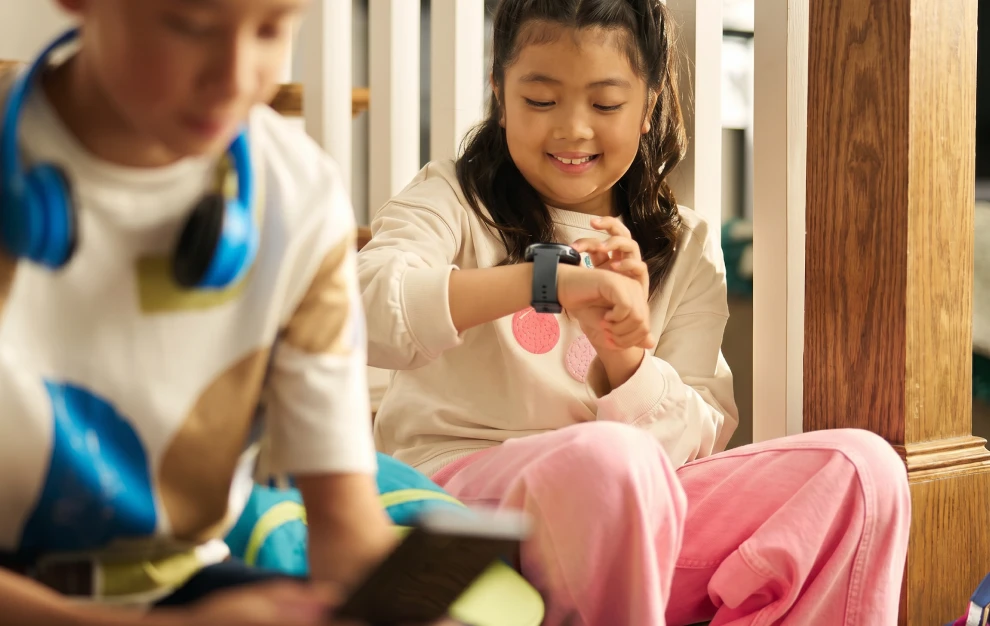

Bark is officially 11 years old, and our team couldn’t be prouder of the work we do every day to serve families just like yours. We’ve accomplished a lot, but something that Bark will always value is helping educate and bring awareness to parents about what’s going on in their children’s digital lives.
This year, we want to celebrate Bark’s birthday by sharing our hard-earned wisdom with you — 11 things we’ve learned after 11 years of boots-on-the-ground experience in the family tech space. These are the top things we’ve learned in years past and the ones that are worth carrying into 2026 and beyond.
11 Lessons in 11 Years of Keeping Kids Safer Online
1. Kids find new apps faster than parents can Google them.
Over the last decade, there have always been a few mainstays that kids will gravitate towards, such as Snapchat, Instagram, and the like. But there’s also always new ones popping up that parents don’t even know to look for. And oftentimes, as soon as parents are aware of the hype, it’s already ancient history to a teenager.
2. Every platform eventually becomes a messaging app.
No matter what an app was originally built for, it seems to eventually roll out a way to chat privately. Spotify, Venmo, and even Google Docs have all become places kids talk to each other.
It's part of why Bark's monitoring has expanded so far beyond the "obvious" platforms over the years, keeping pace with wherever those conversations actually happen.
3. Technology changes every year, but the worries underneath it don't.
The digital world is fast-paced and ever-changing, but many of the risks we were warning parents about back in 2015 are the same things we’re saying now. The apps and algorithms look different, but they still have the same potential for predators and inappropriate content to sneak through.
4. AI is having its "the internet is scary and new" moment.
It felt this way when the internet exploded decades ago, too: overwhelming, unstoppable, and a little intimidating for parents trying to keep up. We said the same thing about the internet then that we’re saying about AI now. And the takeaway is the same: These tools aren't going anywhere, so the job isn't to fear them; it's to learn them alongside your kid.
5. Predators are only getting more sophisticated, but so is the technology to help keep kids safer
Predators have gotten craftier, learning to blend in rather than stand out. Instead of an obvious stranger, it's more often someone posing as a peer or fellow gamer, patiently building trust over weeks (or sometimes even months) before ever asking for anything. That slower, subtler approach makes it easier for a well-meaning kid to miss the warning signs.
The encouraging part is that the tools built to catch it have grown right alongside them. Bark's monitoring technology has evolved to recognize the quieter signs of grooming, like a shift in tone or a push toward secrecy, so parents don't have to catch every red flag on their own.
6. A parent’s instincts are unmatched.
Maybe it's a kid spending a little too much time attached to their phone, or a bedroom door that's suddenly closed more often. It could be nothing. But if something feels off, that instinct is worth listening to, because it's often the exact moment a child needs support the most.
7. “Not my kid” syndrome is a dangerous (but understandable) mindset
Most parents have the conversations, set the rules, and trust that their kids know better. But the internet is a slippery slope, and even the most well-meaning kids can find themselves tangled in sextortion, cyberbullying, or worse. As Bark's CMO Titania Jordan puts it, "good kids make bad choices." It’s not so much about trusting that you have a good kid; it’s more about not trusting the highly tempting and addictive environment that is the internet.
8. Trust is built in the “small” moments, not just in the “big” moments
The big moments are the ones parents remember. It’s the mistake, the crisis, the situation that calls for stepping in. But it's the small, forgettable moments that build the kind of trust that carries a family through the big ones. Maybe it’s just listening to a rant about a video game, or letting a kid crash a bedtime routine just to talk about their day. Those moments are what make a kid believe their parent is safe to come to later.
9. It truly takes a village, even a digital one.
Parenting was never meant to be done in a vacuum. Bark has seen this firsthand through its Facebook group, Parenting in a Tech World, now more than 650,000 members strong. Some of it is practical, parents trading tips and hard-won lessons. Some of it is purely relational, the comfort of sharing a hard story and being met with other parents who have experienced the same thing.
10. Every family is different.
Not much in life is one-size-fits-all, and a family’s digital journey is no exception. Every household has completely different needs, dynamics, values, history, and more, all of which contribute to how they approach tech in the home. Sometimes it even varies between siblings under the same roof. Either way, all parents are simply doing their best, even when it looks different.
11. Your voice makes an impact.
Back in 2015, most major platforms had no parental controls at all. Now, social media companies are facing real accountability, legislation is (slowly) catching up, and awareness has grown in ways that once felt impossible. That shift didn't happen on its own, it happened because parents refused to stay quiet.
Eleven years in, and the Bark team is more grateful than ever to stand alongside the parents doing this work every day. Here's to another year of learning, growing, and helping families raise kids who are safer, smarter, and more confident online.
Read more
Bark helps families manage and protect their children’s digital lives.