

September is National Suicide Prevention Month, and it's a hard one to sit with. Suicide remains one of the leading causes of death among young people in the U.S., and for a lot of parents, that statistic can feel both urgent and strangely distant — something that happens to other families, until it doesn't.
Here's what makes this especially tricky for parents today: teens increasingly process their hardest thoughts and feelings online first. It could be in their search history, a comment on a post, or a chat sent to an online friend. Sometimes that digital world is the very first place a teen expresses what they're going through, long before they'd ever say it out loud to a parent.
In honor of Suicide Prevention Month, we wanted to give parents a full deep dive into how teens commonly experience and express potential suicidal ideation online, so parents can have more confidence in what to look for and best support their kids in times of need.
What Suicidal Ideation Actually Is
Suicidal ideation is a broad term that’s worth understanding first. It can mean anything from vague, passing thoughts like "sometimes I just don’t want to be here anymore" to specific, detailed plans. It's a spectrum, and having suicidal thoughts doesn't automatically mean a teen is in immediate danger, though it should always be taken seriously.
It also helps to know the difference between risk factors and warning signs, because people often lump them together. Risk factors are background conditions that raise someone's risk over time, things like a mental health condition, a history of trauma, or a recent major loss. Warning signs are more immediate signals that something may be happening right now. A helpful comparison experts use is heart disease versus a heart attack. High cholesterol is a risk factor. Chest pain is a warning sign.
General warning signs include:
- Talking about feeling hopeless, trapped, or like a burden to others.
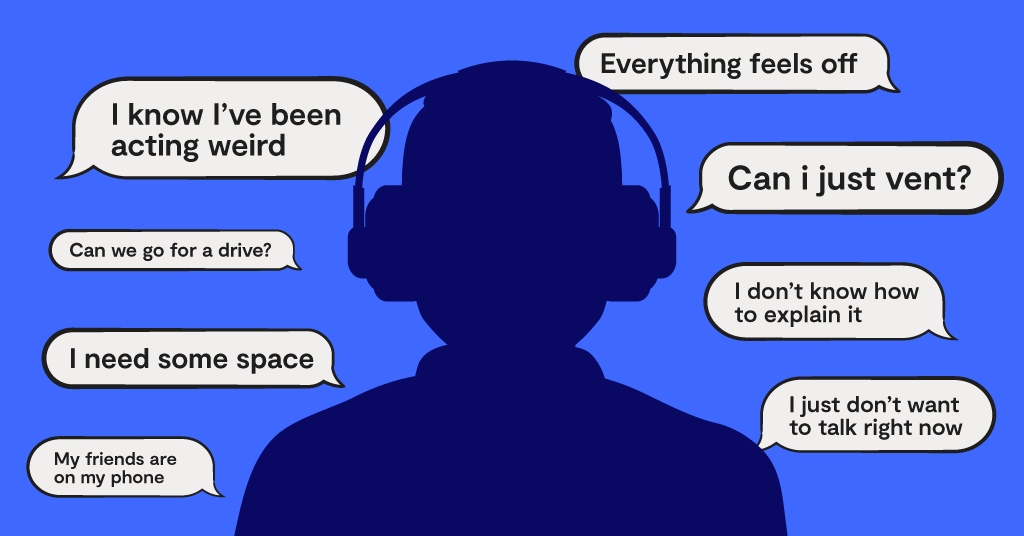
- Withdrawing from friends, family, or activities they used to enjoy.
- Noticeable changes in sleeping or eating habits.
- Giving away prized possessions without explanation.
- Increased use of alcohol or drugs.
- Sudden calm or improved mood after a period of visible sadness.
How Suicidal Ideation Shows Up Online
This is where things get more specific to how teens actually live now. The American Foundation for Suicide Prevention lists searching online for methods as a direct warning sign, and Mayo Clinic notes that spending time looking at suicide-related content is one too. One pilot study went a step further, looking at the actual search histories of people who had survived a suicide attempt, and found meaningful shifts in search terms and search behavior as early as two months before the attempt, sometimes as recently as a week before.
In practice, that can look like:
- A search history with terms related to death, self-harm, or specific methods, even ones that seem oddly specific or out of place.
- A shift in the type of content they're consuming, more posts or videos centered on death, hopelessness, or self-harm.
- Playlists or saved content that lean noticeably darker than usual.
- Sudden changes in who they're messaging most, either withdrawing from close friends or forming new, less visible connections.
- Drafting messages or posts that read like goodbyes, even ones never sent or posted.
A more recent trend worth adding is the growing number of teens turning to AI chatbots to talk through these struggles. Recent research found that nearly 1 in 5 adolescents and young adults have used a chatbot for mental health support.
How Gen Z Talks About Suicide and Mental Health
One extremely important distinction is the generational differences between how Gen Z talks about suicide and general mental health versus how older generations do. Gen Z has grown up in a world where serious mental health issues have gotten more awareness and attention than any other generation. To them, these topics are far more normalized and less taboo.
This translates to many Gen Zers having a more laid-back perspective, to the point where it’s become a regular part of Gen Z humor to joke about mental issues or struggles. And online, this shows up in the form of algospeak: alternative words and spellings for topics likely to be censored by a platform’s moderation algorithms. For example, teens might say “unalive” or “sewerslide” online to describe suicide to avoid their content from being moderated or removed.
The nuance that parents need to know is that a joke doesn’t automatically mean a teen is at risk. Dark humor has become a normal way for this generation to vent frustration or cope with their struggles. If a teen says “I want to unalive myself after this math test,” it's honestly pretty common and not something most teens would register as problematic.
What matters more is the pattern. One offhand joke after a rough exam is different from repeated, casual references to dying, especially paired with any of the other typical warning signs of suicidal ideation.
How to Talk to Your Kid About This
A lot of parents avoid bringing up suicide or difficult mental health subjects directly out of fear that naming it will somehow put the idea in their child's head. This is simply not the case. Teens are already exposed to this language and these topics online, often daily. Bringing it up doesn't introduce the idea; it tells them that their parent is someone who can handle hard conversations instead of flinching away from them. That, in itself, builds trust.
The best way to open the door to this topic? Ask questions. Ask what they see online related to mental health, and what their friends' attitudes toward it are like. Ask directly if they ever joke about it, and what that usually means when they do. Ask if they've ever had thoughts like that themselves, calmly and without a big reaction either way. And through all of it, stay curious rather than scared — a teen can usually tell the difference, and curiosity is what keeps them talking.
If your teen does disclose something real, the most useful response is often the simplest: thank them for telling you, ask what kind of support would help, and loop in a professional if needed. And if you’re ever unsure whether a moment is urgent, the 988 Suicide & Crisis Lifeline is available by call or text anytime, for both a teen in crisis or for a parent who just needs guidance on what to do next.
How Bark Can Help
No parent can watch every search, every message, every playlist shift in real time, and they shouldn't have to. This is exactly the kind of gap Bark's monitoring was built to close. Bark scans for language and content patterns tied to depression, self-harm, and suicidal ideation across texts, social platforms, and search activity, and sends parents an alert when something warrants a closer look, so the right conversation can happen before a crisis, not after one.
For families who want to go a step further, Bark's screen time scheduling can help create healthier boundaries around late-night scrolling, often when these thoughts are most likely to surface, and the Bark Phone has these same protections built in from the start. Check out Bark’s full suite of parental control products to see which one is the best fit for your family.
Read more

Bark helps families manage and protect their children’s digital lives.