Mental health can be a difficult thing to talk about, and sometimes it's even harder between parents and teens. It's natural for teens to turn to other outlets to process their feelings, like a close friend or a safe online space, but even then, they still need their parents. The tricky part is that teens often have a tough time describing what they're going through, and parents sometimes have a hard time hearing it.
Every teen's experience is different, but in honor of World Mental Health Day, we're sharing five things teens wish their parents knew about their mental health, along with a few ways to make those conversations a little easier.
1. "I'm not trying to be difficult"
We're all probably familiar with typical teen behavior that can frustrate parents: eye rolls, arguing, sleeping in, dropping grades. Sometimes, this is just part of being a teenager. Other times, it's a signal that something deeper is going on.
When your teen pulls away or snaps at you, it's easy to take it personally or jump straight to consequences. Before you do, try getting curious about the behavior. Is this new? Has it lasted more than a couple of weeks? Is it showing up in more than one place, like at school and with friends too? Changes in sleep, appetite, grades, or friend groups that stick around are worth paying closer attention to, and they're a good reason to check in instead of cracking down.
2. "Sometimes I just need you to listen, not fix it"
As parents, when our teens do open up about something they're struggling with, our instinct is to immediately offer advice, try to fix it, and explain what they should do. Even when this comes from a place of love, it can leave teens feeling like they weren't really heard, which makes them less likely to come back next time.
The next time your teen brings something up, try reflecting back what you're hearing before offering solutions. Something as simple as "That sounds really frustrating" goes a long way. If you're not sure what they need, just ask: "Do you want help with this, or do you just need to vent?" Most teens will tell you, and they'll appreciate being asked.
3. "Sometimes I don't know what's wrong either"
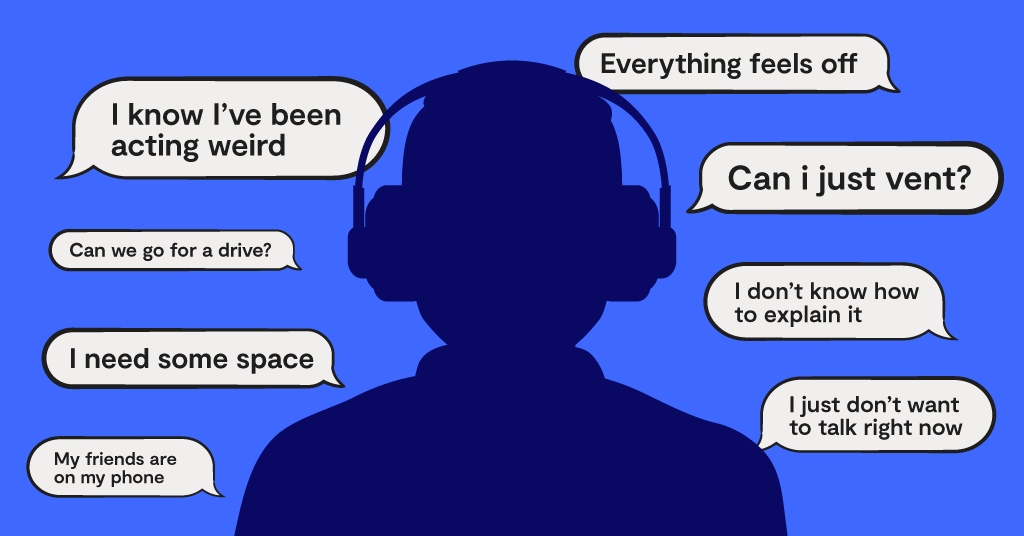
Does this sound familiar? "Are you okay?" "Yeah, I'm fine." Many parents can tell when fine doesn't really mean fine, but asking more questions doesn't always get you much further. That's not necessarily because teens don't want to talk. Sometimes they don't know what's going on themselves, or they don't have the language to describe what they're experiencing.
Instead of pushing for an answer, give them some words to work with. Asking whether they feel more stressed, sad, tired, or overwhelmed can help them put a name to something that feels fuzzy. And if they still don't know, that's okay. Letting them know you're around whenever they're ready is often more helpful than getting a full explanation right now.
4. "Taking my phone away makes me feel more alone"
Parents often see the phone as the problem, while teens see it as an escape from their problems. For many teens, connecting with friends over text or social media is how they cope with what they're going through. While phones can certainly contribute to unhealthy habits, taking them away completely can leave teens feeling isolated at the exact moment they need support.
That doesn't mean anything goes. It just means the conversation may need to be about balance rather than all-or-nothing. Instead of taking the phone away as a punishment, you might set phone-free times like dinner and bedtime while keeping texting with friends available during the day. Talking through these boundaries together, rather than handing them down, also helps your teen feel like you're on the same team.
5. "I want to talk, just not always face to face"
Have you ever noticed that some of the best conversations with your teen happen on a car ride or a walk? That's likely because the conversation isn't happening face-to-face. It's happening side-by-side. Teens can feel put on the spot with direct eye contact, but they may find it easier to open up when they don't have to look right at you.
Take advantage of those moments when they come up naturally, like driving to practice, cooking dinner together, or walking the dog. And don't underestimate texting. Some teens find it much easier to type out something hard than to say it out loud, so a quick "Hey, you seemed off today. Want to talk?" can open a door that a sit-down conversation might not.
Pro tip: If you need a little help breaking the ice, Bark's Drive-A-Logue cards offer fun and meaningful what-if questions to get you talking on your next drive.
What to Do When You Talk to Your Teen
If there are two pieces of advice we can give, it's this: listen before you speak, and ask questions before you give advice. These simple steps create the space real conversations need. Every family, situation, and mental health struggle looks different, and every child will need something different. But what every teen needs is to know that their parent cares and is a safe place to land. Once that trust is there, you can start talking more in depth about how to help.
It's also important to know when to bring in more support. If your teen's struggles last more than a couple of weeks, start affecting daily life, or they talk about feeling hopeless or hurting themselves, reach out to their pediatrician or a mental health professional. If you're ever worried about their immediate safety, you can call or text 988 to reach the Suicide & Crisis Lifeline.
How Bark Can Help You Support Your Child
A healthy, balanced digital life can play a big role in a teen's mental health. That's why Bark offers screen time and web filtering controls that let parents manage when and how much time their teen spends online. Bark also monitors for signs that your child may be struggling with issues like anxiety, depression, body image concerns, and more. If something concerning is detected, you'll get an alert so you can be there for your child when they need you most.
From the Bark App to the Bark Phone, Bark Watch, and Bark Home, our suite of parental control tools is designed to support families at every stage. Explore our products to find the best fit for your family.
Read more


Bark helps families manage and protect their children’s digital lives.