
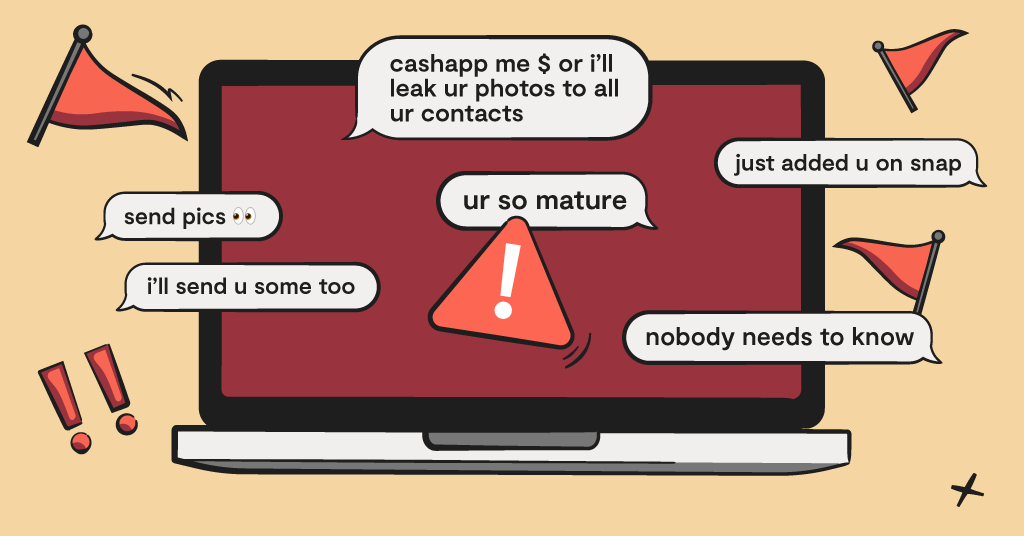
Sextortion is a growing online threat facing kids and teens today. This term comes from the words “sex” and “extortion,” and refers to an online scam where someone threatens to share explicit or compromising images of a victim unless they pay money or comply with demands.
As a parent trying to keep your child safe, your first line of defense against this threat is knowledge. Knowing the signs and talking about them with your child beforehand can make all the difference if they ever encounter a sextortion attempt in their online world.
We’ve pulled together the 10 most important red flags of sextortion that parents should know. We hope this helps equip you and your family to keep them safer in their digital lives.
1. Pushing the Conversation to a Private Chat
Sextortion always occurs in some kind of private online chat. Oftentimes, the predator will send message requests on apps like Snapchat, Discord, or WhatsApp. If a predator encounters a child in any kind of public forum (such as a message board for a video game or in social media comments), they will almost immediately suggest moving the conversation to private DMs or a specific messaging platform.
2. Posing as an Attractive Young Woman
One of the most common scenarios of sextortion is teen boys or young men targeted by seemingly attractive young women who express a romantic interest. This is by no means the only tactic used for sextortion, but it’s certainly frequent.
These profiles often use heavily filtered photos, revealing clothing, or stolen images. The person may claim to have a “mutual friend” or open with an overly flattering compliment to build trust quickly.
3. Conversation Gets Personal Fast
Grooming usually begins with kindness and validation. After just a few messages, the person may say unusually supportive or affirming things, or encourage your child to share personal or emotional details. What starts as friendly often escalates into romantic or sexual territory.
4. Asking for Pictures, Videos, or Personally Identifiable Information
Early requests might seem harmless, such as a selfie, a quick picture, or basic personal details. Over time, the requests can include more sensitive information like a full name, school, city, or phone number. The more information a predator has, the more leverage they can use later.
Remember AI: In some cases, sextortionists don’t even need explicit images. As long as the predator has any image of the child’s face, they can use AI to generate an explicit image.
5. Increased or Unwarranted Anxiety in Your Child
Children targeted by sextortion may suddenly seem anxious, withdrawn, or distressed. They might lose interest in activities they once enjoyed or appear unusually nervous. This behavior is often a result of the guilt and shame that victims so often feel at the hands of sextortionists.
6. Pressure to Keep the Relationship Secretive
A major red flag is if the victim is pressured into not telling anyone about the conversation or relationship. The predator uses the secrecy to isolate the child from others — especially from parents or a trusted adult who would intervene.
7. Becoming More Secretive of Tech
As a result, kids who are being manipulated may start guarding their technology. They may be reluctant or even resistant to handing their phone over for regular checks, or start deleting messages before anyone else can read them.
8. Requesting Explicit Images or Videos
Once trust is established, that’s when the predator will ask for explicit content. They may send one first to encourage the victim to follow suit, or they may promise to reciprocate if the victim sends first. This is when the situation will begin to escalate.
Carter’s story is a profound and revealing depiction of how sextortion can play out. This was a part of a human trafficking awareness campaign from the U.S. Department of Homeland Security. Watch to learn more and see if you can identify the warning signs leading up to Carter being sextorted.
9. Threatening to Reveal Explicit Content
As soon as the sextortionist has something they can use, they will waste no time using it against their victim. They will threaten to expose the compromising images in exchange for money or something of financial value. They might threaten to post it online publicly or send it directly to their friends and family.
10. Unexplained Financial Activity
Sextortionists most often request money, gift cards, or digital payments for any amount from $50 - $500 — an amount most kids don’t have. If you noticed some unusual money transfers in your child’s bank account, or even in your account, it may be a sign to check your child’s online messaging activity.
Kids in this situation often act impulsively out of fear and shame. All they want to do is make it go away as soon as possible without anyone finding out. Teens are still developing executive functioning, and when fear is involved, it can cloud their judgment.
What To Do If You Recognize These Signs
If your child has been the victim of sextortion, we’ve listed some resources on where to start. Before you take actionable steps, remember to slow down and reassure your child that you are there for them. Remind them you’re not upset, and you just want to make sure they’re safe. As frightening as you may feel, it’s often even scarier for kids.
- Bark’s Guide for Families Affected by Sextortion
- The Internet Crime Complaint Center (IC3)
- CyberTip report
- NCMEC Take It Down
- State-by-State Sextortion Laws
- 5 Questions with Mike Arterburn About Sextortion, Kids, and Online Safety
Preventing Sextortion Before It Starts
One of the ways you can be proactive about your child’s online safety is by using tools like Bark. Bark scans online activities — including the texts and photos they send along with social media posting, commenting, and DMs — for possible signs of sextortion, along with other serious issues like suicidal ideation and bullying. If we find something concerning, you’ll get an alert so you can check in and make sure everything’s okay.
Check out our products page to learn more about the different devices we offer that can help you prevent sextortion before it starts.
Read more



Bark helps families manage and protect their children’s digital lives.