
Most likely, you've had the conversation (or multiple conversations) about a popular app your child is asking for, and you've decided to say no. It makes sense, since the most popular apps tend to carry the most risk, yet that's exactly where kids want to be.
Saying no and sticking to it is hard, especially when your child feels left out because of it. The usual suspects? TikTok, Snapchat, Roblox, and a few others.
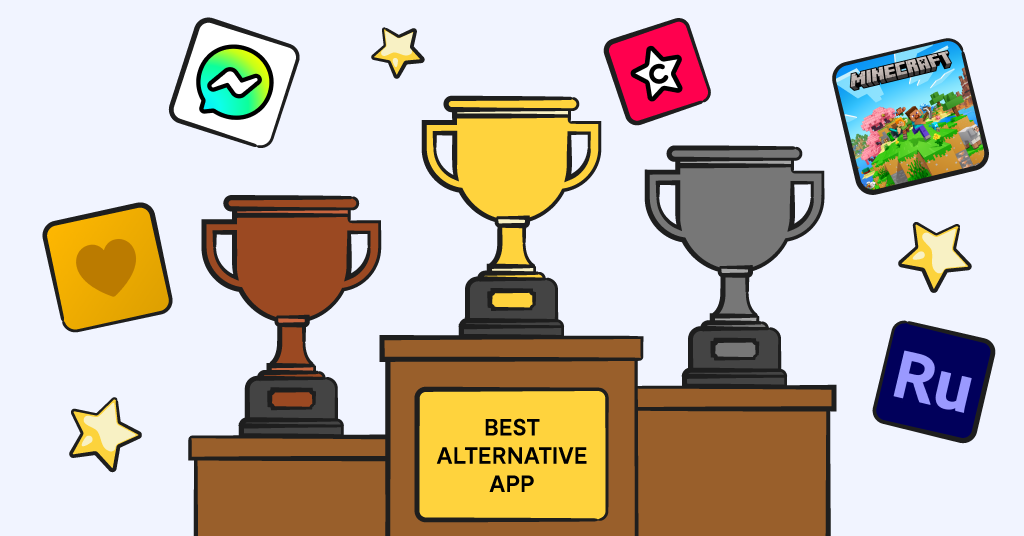
The good news is that you don't have to choose between keeping your kid safer and letting them feel like they're part of the conversation. There are some genuinely great alternatives out there that offer the fun, creative, and social experiences kids are craving, without the risks that keep parents up at night. We've rounded up five of the most-requested apps and the safer swaps worth considering.
The TikTok Alternative: Coverstar
Why TikTok is a concern: TikTok's risks are well-documented and tough to fully lock down, even with privacy settings adjusted. With inappropriate content, private DMs with strangers, and a relentless algorithm, it’s understandable why many parents aren't ready to hand it over just yet.
Why Coverstar is better: Coverstar was designed to let kids create fun, lip-sync style videos similar to TikTok but with way more built in guardrails to keep them safer. There are no private DMs, which eliminates one of the biggest risk factors on social platforms. Content moderation is also more robust, making it a far friendlier environment for younger users. So they still get the creative outlet, without the exposure.
Bonus tip: Bark monitors Coverstar!
The Snapchat Alternative: Locket Widget
Why Snapchat is a concern: Snapchat is known for its disappearing messages, which gives kids a false sense of security that can lead to tons of inappropriate content and interactions that parents struggle to monitor. Additionally, Snapchat has some serious safety and privacy concerns with Snap Map that can expose kid’s real-time location to other users.
Why Locket Widget is better: Locket is an app that lets kids and their close friends or family share photos that appear directly on each other's home screens — like a little window into each other's day. It's built around real relationships, not follower counts or stranger interactions. There's no public feed, no DMs with strangers, and no location sharing. It's intimate, it's sweet, and it gives kids the "sharing my life" feeling without the risks that come with a massive social platform.
The Roblox Alternative: Minecraft
Why Roblox is a concern: Despite moderation efforts, Roblox's open chat features have been continuously lead to kids being contacted by strangers, and many user-generated games contain content that's far from age-appropriate.
Why Minecraft is better: Minecraft has been a creative powerhouse for over a decade, and for good reason — it gives kids nearly unlimited freedom to build, explore, and problem-solve. When played in single-player or local multiplayer mode, there's no open-world chat with strangers. Parents can also choose private servers where only approved players (think: family and trusted friends) are allowed. Kids still get the immersive gaming experience, but in a space that's much easier to control and monitor.
The CapCut Alternative: Adobe Premiere Rush
Why CapCut is a concern: CapCut is owned by ByteDance — the same company behind TikTok — and is designed to funnel content directly to TikTok's platform, raising the same data privacy concerns and exposing kids to its content along the way.
Why Adobe Premiere Rush is better: If your kid is serious about video editing, Premiere Rush is actually a step up creatively — it's a legitimate, professional-grade tool that teaches real skills. There's no social media integration pushing kids toward risky platforms, and it keeps the focus on the craft itself. Bonus: learning Premiere Rush is a genuinely marketable skill that could serve them well for years to come.
The WhatsApp Alternative: Messenger Kids
Why WhatsApp is a concern: WhatsApp has no age verification, and kids can be added to group chats by anyone who has their number, including strangers. Plus, the platform’s end-to-end encryption makes conversations extremely difficult for parents and monitoring tools to supervise properly.
Why Messenger Kids is better: Messenger Kids was specifically built with children in mind, and it shows. Your child cannot send or receive messages from anyone you haven't approved, which means no surprise group chats, no stranger danger, and no contact from people outside your family's trusted circle. The app is also free of ads, and Facebook's parental dashboard gives you visibility into your child's activity. It's messaging with genuine guardrails built in.
How Bark Can Help
Finding safer app alternatives is a great first step, but it's just one piece of the digital safety puzzle. Even on "safer" platforms, kids can encounter risks, have difficult conversations, or stumble across content that warrants a check-in.
That's where Bark comes in. Our suite of parental control products is designed to work quietly in the background so you can stay informed without hovering. Bark monitors texts, emails, and 30+ apps and social media platforms for signs of concerning activity (things like cyberbullying, depression, predatory contact, and more) and sends you an alert only when something needs your attention. No more reading every message, just a heads-up when it matters most.
Beyond monitoring, Bark also gives you tools to manage screen time, block inappropriate websites and apps, and track your child's location — everything you need to feel confident about your kid's digital life, all in one place. Check out our products to see which one is a fit for your family.
Bark helps families manage and protect their children’s digital lives.