Do you remember how you used to listen to music as a kid? For many of us, it was cassette tapes and CDs. Eventually, it was iPods and MP3s. Now? It’s nothing but streaming straight from our smartphones. Music has never been as easy and accessible as it is today, which is a great thing, until your kid wants to start listening to music. These days, some parents wish we could go back in time to those cassette tapes.
Why? Because kids having easy access to music does not always equal safe access to music. Unfortunately, the music options for kids range from very limited to very open (and risky). In this post, we’re going to discuss some of the common dangers and struggles parents have faced when it comes to giving their kids an appropriate music listening experience, as well as some recommendations that may work for your family.
What’s the Harm in Music?
In the pre-streaming era, the worst we could do was accidentally download a computer virus while burning CDs from Napster or LimeWire. But nowadays, when kids have access to streaming apps, it means they have access to way more than just music.
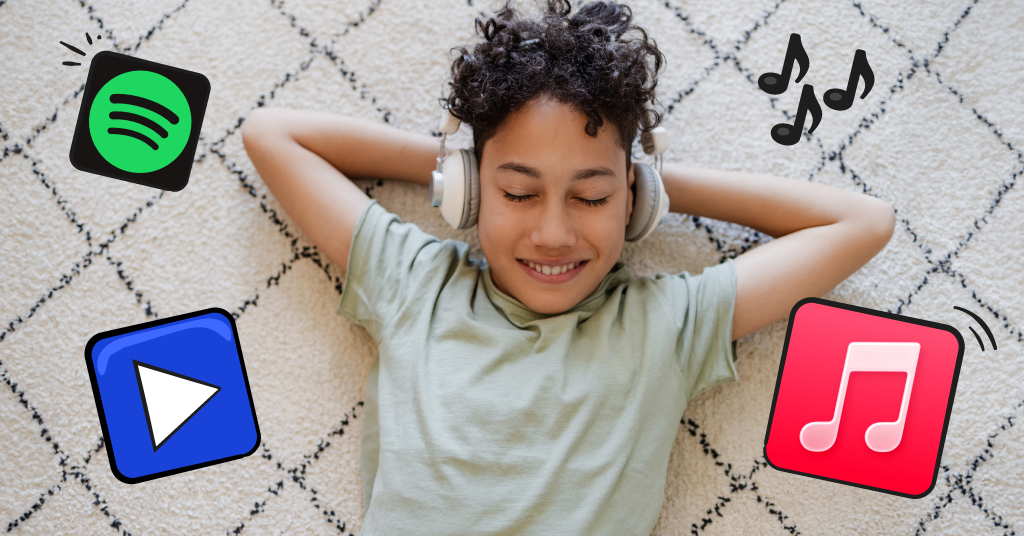
There’s no better and unfortunate example of this than Spotify. It’s one of the most popular streaming apps in the world, and yet it’s a common place where kids encounter porn and adult content. Spotify recently introduced music videos to its platform, many of which have very sexual depictions. Aside from videos, they can easily find or stumble across podcasts of people discussing sexual or adult content. Worse still, there are podcasts of just sexual noises. And to top it all off, Spotify now has private messaging, making even music just another social media platform.
The issue with streaming apps in general is that they inherently require using the internet. Sometimes, kids will find a “backdoor” to the internet through these apps, giving them full, unfettered access to any site. It’s not just Spotify, though — YouTube, Apple Music, and Amazon all have similar issues.
The Current State of Music for Gen Z and Gen Alpha
In light of these risks, you may have decided to start searching for safer options for kids to listen to music. All parents are likely looking for slightly different things, but some of these characteristics may look familiar from your own checklist:
- No internet access
- No access to apps or social media
- The ability to reliably block all adult content
- The ability to approve songs for a child’s profile and/or device
- Ability to use without connecting to a smartphone
- Doesn’t have a screen
- Or, a screen that resembles a smartphone without full smartphone capabilities
- Access to a specific music streaming platform with an already curated playlist
Unfortunately, a music solution that is truly made to fit these needs for families is extremely hard to find. Don’t get us wrong, there are kid-friendly options, but they are very limited. Either it’s safe for toddlers, or it’s open access that’s more suitable for older teens.
Tried and True Solutions
Here are some methods of music listening that many parents have tried for their children. Many of these were pulled from our Facebook group, Parenting in a Tech World, where over 650k parents discuss digital parenting questions just like this one. We hope this helps you find something that works best for your family.
For the youngest or those who need a limited music experience
Spotify Kids: Spotify has a specific app for kids with a curated list of age-appropriate music. If you’re familiar with Kidz Bop, it’s similar to this. The music is great for young kids, but many grow out of it just as soon as they actually get interested in music.
Yoto player: This is a screen-free audio player designed for kids, best for ages 3-12. It works with physical cards that you insert into the Yoto player. You can get pre-loaded cards from Yoto that have music, stories, podcasts, and more. You can also use a “Make your own” card to download your own music or audio files to it.
For the oldest or those ready for a more open music experience
Music streaming with the option of a content filter: Many popular streaming apps like Spotify, Apple Music, YouTube Music, and more have a content filter option in the settings. When toggled on, this will ideally block music with adult content. But we caution parents not to place too much trust in this. The filter is not reliable, and adult content still gets through. Additionally, there’s nothing stopping kids from toggling the setting off themselves at any point. That’s why this is for parents who feel their kid is ready for a more hands-off listening experience.
For those somewhere in between
Mighty 3: This device is not necessarily targeted towards kids, but it’s popular among families. Remember iPod Shuffles from back in the day? Basically just a small square with no screen and only the navigation buttons. That’s what the Mighty is. It allows you to sync music from your preferred music streaming platform so you can listen to it offline. It’s popular among athletes who don’t want to bring their phones while they work out, but parents use it so they can choose which songs get synced to their child’s Mighty device.
MP3s with knockoff iPods: Instead of an iPod Shuffle, some parents want something that resembles more of an iPod Touch with a touch screen option — but still with no internet access and more control over the music. There are tons of options on Amazon, but it’s hard to find one that checks all the boxes. If you go this route, be sure that you triple-check what access it has before giving it to your child.
Alexa or home assistant speaker: This is a popular one. Many parents have found that their kids just want something to play in their rooms in the background or even to listen to something while they fall asleep. Alexa specifically allows you to listen via Bluetooth with Spotify, Pandora, etc. It also has some available parental controls, so be sure to check those out to ensure they don’t access more outside of the music you allow them to listen to.
How Bark Can Help
Bark strives to be your helping hand when it comes to your child’s online safety, and that doesn’t stop at music. Bark can help you manage exactly which music apps your child has access to, giving you the option to easily block ones you’re not comfortable with. We can even monitor Spotify and send you alerts for risky song lyrics, plus private messages on Android devices.
Bark has an extensive suite of parental control products that we’ve designed to fit any family, no matter what their digital safety needs are. Check out our products page to find out which one is the best fit for you and your child.
Read more
Bark helps families manage and protect their children’s digital lives.