
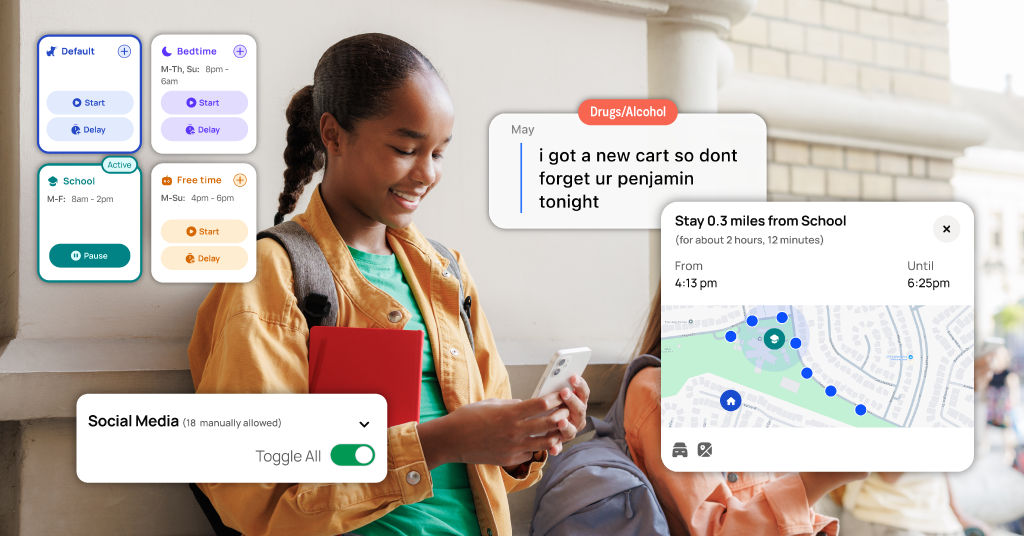
We spend a lot of time talking to parents about raising kids in the digital world, but today, we want to talk directly to the teens. Not to lecture you or tell you to just put your phone down, but to offer some real social media safety tips for teens when online life can feel overwhelming, confusing, or just a lot.
Growing up with tech doesn't automatically mean you have all the answers. So consider this your judgment-free guide to handling social media, screen time, and everything in between.
The Goal Isn’t To Get Rid of Tech, But To Build a Healthy Relationship With It
If you ever feel like your parents would be happier with getting rid of all tech, you might not be wrong. When parents see social media, all they see is risky content and harmful strangers. But when you see social media, you likely see the place where you get to express yourself, keep up with what's happening, connect with friends, and sometimes just decompress.
Both things can be true at once. Tech can be genuinely good for your life and come with real risks worth knowing about. We’re not here to make social media the enemy, but just help make sure it continues to be a positive thing, and give you tools for those moments when it can be harmful.
Tech Risks Don’t Go Away As Soon As You Become an Adult
This advice isn’t unique to you just cause you’re a teen — these are things that apply to adults of all ages too. Adults can be just as susceptible to scams and doomscrolling as anyone else (has your parent ever tried to send you a reel that was clearly AI slop? Yeah, we need help, too).
So we don’t want to talk down to you, but call you up to the level of responsibility that’s required to have a healthy tech life. It’s just like driving a car — it’s first and foremost a responsibility before it’s something to do just for fun or to have more freedom.
With that said, here's some real, honest advice on keeping a healthy relationship between your online life and real life.
Real Advice For Teens To Stay Safer On Social Media
What A Private Profile Actually Means
If you think having a private profile is enough to keep you safe online, you wouldn’t be alone. But the privacy you get with it isn’t as secure as we’d like to think.
Most apps default to public when you sign up, meaning anyone can find and see your profile until you change that. And even on a private account, content can be screenshotted and shared in seconds. That photo you posted for your 200 followers? It can reach people you'd never expect. That may not seem like a big deal, but remember It can also reach future employers, coaches, and college admissions officers. Any recruiter or hiring manager will tell you its common practice to look up the social media profiles of their potential candidates.
Every post, tag, like, and comment you make adds to your digital footprint — a permanent record that follows you around whether you like it or not. A good gut-check: open an incognito window and Google your name + your city. You might be surprised what shows up.
Location tagging is another one to think twice about. For many teens today, it’s completely normal to share your location with close friends. But there’s a difference between this and announcing your location on a public platform, letting anyone know where you are at that exact point in time.
The fix is simple but worth actually doing — go into your privacy settings right now and make sure your accounts are set to private. Then be thoughtful about who you're accepting and what you’re posting.
Online Predators Never Seem Like a Bad Guy At First — And That’s The Point
It's easy to think that an online predator might be as easy to spot as one in person. We all know the classic warning about strangers with vans. But online, predators are skilled manipulators who go to great lengths to come across as trustworthy, funny, and genuinely caring about you specifically.
The process usually looks the same: normal, friendly conversation first — then slowly pushing toward secrecy, private chats on different apps, and eventually requests for photos or personal information. It's gradual enough that it can be hard to notice in the moment.
Here are the red flags worth knowing:
- Someone you've never met in real life asking to move the conversation to a different app.
- Asking for photos — especially "just between us."
- Offering gifts, money, or unusual amounts of validation.
- Asking you to keep the friendship a secret from your parents.
Trust your gut. If something feels off — even slightly — it probably is. You never owe anyone online your time, your photos, or your information. And telling a trusted adult isn't snitching. It's smart.
Try the 24-hour Rule For Posting
Remember in kindergarten when adults would say, "Think before you speak"? Now it's: think before you post. Or text.
Once something is out there, you lose control of it immediately. Screenshots are forever. This matters for anything you post — ranting about a teacher, sharing something embarrassing about a friend — but it especially matters for anything sexual. Even if you completely trust the person you're sending something to, once that image leaves your phone, it's no longer yours. In many states, sharing intimate images of a minor is a crime — even between minors.
A simple rule that actually works: if you're feeling angry, hurt, or impulsive when you want to post something, wait 24 hours. If it still feels like a good idea then, okay. Most of the time, it won't. And before you post, ask yourself: would I be okay if my grandmother, my principal, and a total stranger all saw this? If the answer is no for any one of them, think again.
Treat Your Attention Like Your Money — Save It
Social media is free because the companies aren't after your money — they're after your attention. Infinite scroll, notifications, the little dopamine hit of a like — none of that is accidental. These companies spend millions of dollars engineering products around your psychology.
So if Big Tech is willing to spend that much to capture your attention, that means it's valuable. Treat it accordingly — more valuable than money, honestly — and protect it.
Signs that social media might be taking more than it's giving: you feel worse after scrolling than before you started. You get anxious when you can't check your phone. You're losing sleep to stay online. You're comparing yourself to people and coming up short. These aren't personal failings, they're the intended effect of a very well-designed product.
The antidote is just making intentional choices: unfollow accounts that consistently make you feel bad, set your own time limits before an app sets them for you, and try a "social media sunset" — no apps after a certain time at night. Sleep quality improves dramatically when your last activity isn't doomscrolling.
When Something Goes Wrong, Here’s What To Do
The truth is, when something goes wrong online — the cyberbullying escalates, a private image gets shared without your permission, someone won't leave you alone — the best thing to do will feel like the hardest, maybe even most impossible thing to do. But here's the plan:
- Don't retaliate. It almost always makes things worse and can complicate things legally.
- Screenshot the evidence first, including usernames and timestamps, before you block or delete anything.
- Use in-app reporting tools. Platforms should take these reports seriously, but sadly that’s not always the case. But it’s a step towards getting the post or account permanently removed.
- Tell a trusted adult — a parent, school counselor, older sibling, anyone you trust. This is the one that you’ll probably want to avoid the most, but no one (especially not a teen) should have to handle something like this alone.
Remember: the person who did something harmful is the one who should feel embarrassed — not you. Things happen, and they're scary, but they are not your fault.
If you feel unsafe or can’t talk to a trusted adult, call 911 or the CyberTipline at 1-800-843-5678.
Remember: You Got This!
If keeping a healthy online life is important to you, you're already ahead of the game just by looking for advice and reading a post like this. Most people don't think twice about it.
You don't have to handle the pressures of being online alone. Talk to people you trust. Use the tools available to you. And if your parents have Bark set up on your device, it's worth knowing it's not there to read your every message — it's there to catch the serious stuff quietly, in the background, so they don't feel like they have to hover. For a lot of families, that actually means more freedom, not less.
The internet isn't going anywhere, and neither are you. So you might as well learn to move through it with confidence. Stay safe!
Read more

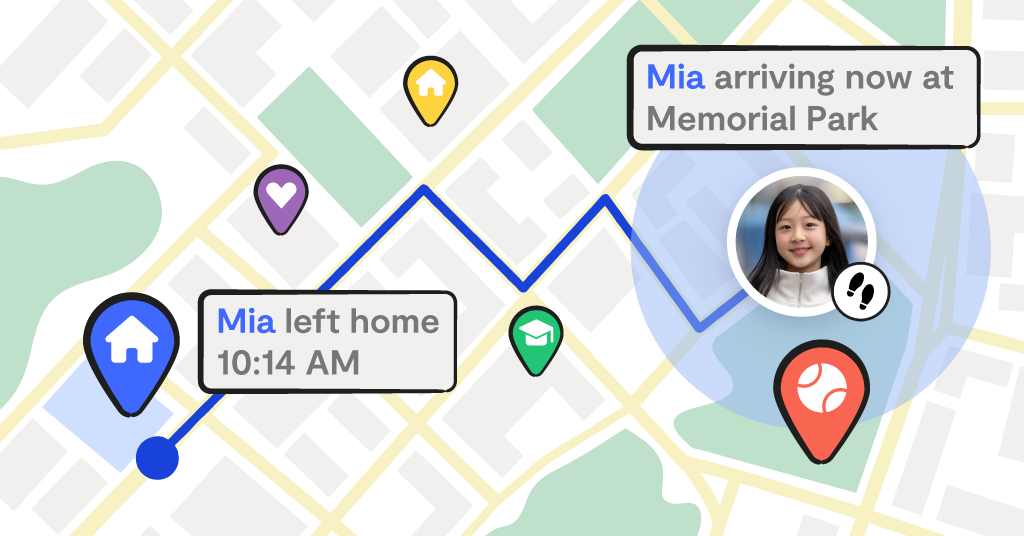
Bark helps families manage and protect their children’s digital lives.